

Most viewed articles


Cross-border e-commerce, digital payments, artificial intelligence (AI), innovation and startup cooperation are expected to emerge as new growth engines for Viet Nam–India economic relations as the two countries are striving to realise a bilateral trade target of 25 billion USD by 2030.
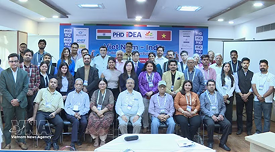
The outlook was highlighted by Bui Trung Thuong, Viet Nam’s Trade Counsellor in India, at the recent forum “Viet Nam–India Cross-border E-commerce” in New Delhi, which brought together more than 100 representatives from government agencies, industry associations, logistics providers, fintech firms, technology platforms and startups from both countries.
Bui Thi Thanh Hang, Head of the Department of International Cooperation at the Agency of E-commerce and Digital Economy (iDEA) under Viet Nam’s Ministry of Industry and Trade, said the country’s B2C e-commerce market was estimated to generate 31 billion USD in revenue in 2025, with annual growth of 25.5%, placing Viet Nam among the world’s fastest-growing digital markets. E-commerce currently contributes around 11% of the country’s total retail and service revenue, reinforcing its role as a major pillar of the digital economy.
Hang noted that cross-border e-commerce is creating fresh opportunities for bilateral cooperation. Indian products such as natural cosmetics, essential oil, herbal products, fashion items and household goods are seen as highly promising in the Vietnamese market. At the same time, Vietnamese businesses, especially small and medium-sized enterprises, are increasingly able to use digital platforms to access India’s market of more than 1.4 billion consumers.
She added that Viet Nam is continuing to refine its legal framework, with the Law on E-commerce expected to take effect on July 1, 2026. Support programmes are also being rolled out to help businesses join international e-commerce platforms and develop “national pavilion” models, paving the way for stronger business connectivity and deeper participation in the digital economy.
Representing the Indian side, Sanath Kumar, Chief Economist of the PHD Chamber of Commerce and Industry (PHDCCI), said India currently has over 80 million micro, small and medium-sized enterprises (MSMEs) and the world’s third-largest startup ecosystem, with around 150,000 startups. He described cross-border e-commerce as a vital tool for MSMEs to expand markets, generate jobs and improve access to global customers.
Ashok Gupta, Head of Asia-Pacific International Relations at PHDCCI, underscored the message “Made in India, Made in Viet Nam – for the world”, saying the two countries could step up cooperation in green logistics, electric vehicles, AI and blockchain to optimise supply chains and lower logistics costs in cross-border trade.
Meanwhile, Sagar Sharma, Co-founder of Rainwater Labs, shared insights from India’s UPI digital payment system and suggested Viet Nam and India prioritise cooperation in digital platforms for MSMEs, cross-border payments and AI/IoT applications in supply chain management.
Speaking to Viet Nam News Agency correspondents in India, Naveen Seth, Deputy Secretary General of PHDCCI, described Viet Nam and India as two dynamic Asian economies with strong cooperation potential in e-commerce, logistics and digital economy, driven by their young populations and rapid digital transformation.
According to Seth, cross-border e-commerce can directly connect MSMEs from both countries, helping them expand into new markets at competitive costs. He added that the Indian business community sees considerable potential in cooperation with Viet Nam and hopes discussions at the forum will soon translate into concrete projects.
PHDCCI will continue coordinating with the Viet Nam Trade Office in India and related partners to organise business networking activities, including plans to send Indian business delegations to Viet Nam, contributing to more substantive cooperation and the shared goal of raising bilateral trade turnover to 25 billion USD by 2030, he said.
During the discussion session, many Indian enterprises showed strong interest in support policies for foreign MSMEs, along with regulations on VAT, e-invoicing and procedures for entering Viet Nam’s e-commerce market.
The forum provided a practical platform for dialogue between policymakers and businesses from both countries, helping identify new cooperation opportunities in e-commerce, logistics, digital payments and innovation, while supporting efforts to further expand Viet Nam–India trade relations./.
Source: Vietnam+
- USTR Makes Findings and Proposes Action in 60 Section 301 Investigations Relating to Failures to Take Action on Trade in Forced Labor Goods
- [VCCI] The US officially initiates a Section 301 Investigation into Vietnam on Intellectual property
- General Secretary and President To Lam's working visit to three ASEAN countries: Demonstrating the stature of proactive and constructive diplomacy.
- Viet Nam accelerates innovation drive as skilled workforce becomes key to science and technology growth
- The US is increasing controls on AI chip exports