


Most viewed articles


The two economies are highly complementary, with India holding advantages in raw materials while Viet Nam excels in manufacturing and exports, creating ample opportunities for deeper integration into global value chains.
Viet Nam and India are seeking to deepen cooperation in the footwear industry by promoting sustainable value chains, enhancing business connectivity, and leveraging complementary strengths, heard an online seminar held on April 9.
The event, themed “Shaping the Future of Viet Nam – India Footwear Cooperation,” was jointly organised by the Viet Nam Trade Office in India and the Viet Nam Leather, Footwear and Handbag Institute, drawing participation from policymakers, industry associations, research institutes, and businesses from both countries.
In his opening remarks, Vietnamese Trade Counsellor in India Bui Trung Thuong highlighted the footwear sector’s significant role in economic growth, exports, and job creation in both nations. He noted that the two economies are highly complementary, with India holding advantages in raw materials while Viet Nam excels in manufacturing and exports, creating ample opportunities for deeper integration into global value chains.
Tran Xuan Thuy from the Industry Agency under the Ministry of Industry and Trade said Viet Nam is accelerating its shift from contract manufacturing to design, branding, and higher value-added stages.
This transition is supported by policies promoting industrial development, innovation, and digital transformation. He proposed establishing a ministerial-level bilateral cooperation mechanism, strengthening business linkages, and encouraging Indian investment in Viet Nam’s supporting industries.
Sanjay Gupta of the Indian Footwear Components Manufacturers Association (IFCOMA) noted that India’s footwear industry is expanding rapidly, with a target value of 50 billion USD by 2030. He described this as an opportune time for both countries to foster joint ventures, technology transfer, and production cooperation to build a sustainable manufacturing ecosystem serving global markets.
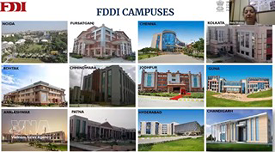
Renu Sharma from the Footwear Design and Development Institute (FDDI) underscored the potential for collaboration in training, research, and innovation, including student and faculty exchanges and joint programme development. Meanwhile, Gopal Gupta, President of the Agra Footwear Manufacturers and Exporters Chamber, invited Vietnamese firms to participate in the “Meet at Agra Fair” in early October as a platform to explore partnerships in materials and supporting industries.
Participants exchanged insights on market trends and discussed concrete cooperation avenues, from developing supply chains for materials to attracting investment and enhancing workforce quality. Many businesses expressed interest in forming partnerships, joint ventures, and expanding into each other’s markets.
Viet Nam and India are among Asia’s leading footwear producers and consumers. Viet Nam ranks third globally in production and second in exports, while India is the second-largest producer and consumer, accounting for around 9% of global output, with strong growth expected in its domestic market./.
Source: Vietnam+
- USTR Makes Findings and Proposes Action in 60 Section 301 Investigations Relating to Failures to Take Action on Trade in Forced Labor Goods
- [VCCI] The US officially initiates a Section 301 Investigation into Vietnam on Intellectual property
- General Secretary and President To Lam's working visit to three ASEAN countries: Demonstrating the stature of proactive and constructive diplomacy.
- Viet Nam accelerates innovation drive as skilled workforce becomes key to science and technology growth
- The US is increasing controls on AI chip exports