


Developing a modern and sustainable fisheries industry
01/04/2026 41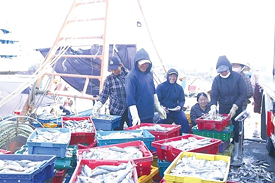
Most viewed articles


In recent years, localities in the province have promoted the application of high technology in aquaculture and modernized their fishing fleets. At the same time, they have built a sustainable, economically efficient aquatic ecosystem adapted to climate change to realize the goal of making aquaculture a key economic sector.
According to industry forecasts, due to the impact of climate change and the destructive fishing practices of fishermen, seafood production will gradually decrease over time. Therefore, to compensate for the predicted decrease in seafood production under increasingly difficult fishing conditions, the province has directed localities to encourage people to expand the area of aquaculture in all three types: saltwater, brackish water, and freshwater. According to statistics, the province has developed approximately 6,000 fish cages, 1,000 hectares of clam farming, and 4,100 hectares of shrimp farming. Although the aquaculture area has remained stable since 2022, aquaculture production has increased significantly thanks to the application of modern techniques and technologies in production.
Tan Tien commune is known as a low-lying, flood-prone area, primarily used for sedge cultivation. However, due to market fluctuations, sedge production has not yielded the expected economic returns, leading residents to diversify their crops and production. Simultaneously, the local government has encouraged households to consolidate land and shift to farm and aquaculture models.
According to Mr. Mai Van Tai, Chairman of the Tan Tien Commune People's Committee, the entire commune has 400 hectares of shrimp farming, including 7.7 hectares of whiteleg shrimp farming using industrial models, yielding profits ranging from 0.9 to 1.1 billion VND/hectare/year; dozens of times higher than traditional farming methods.
Not only in Tan Tien commune, but also in tidal communes and wards such as Van Loc, Hoang Tien, Hoang Chau, Ngoc Son, etc., people have switched from traditional aquaculture models to high-tech farming. At the same time, they are promoting digitalization, applying recirculating water filtration technology, automatic feeding machines, and environmental monitoring sensors... This is the "key" to improving productivity and product quality, meeting stringent standards such as VietGAP to reach export markets.
Not only in aquaculture, but also in the fishing sector, people are striving to modernize their fleets, increase productivity and output, and protect aquatic resources. The province has more than 6,100 fishing vessels, including 978 offshore fishing vessels. Many fishing boats are equipped with modern marine electronic equipment such as GPS, fish finders, and communication devices; fishing and preservation technologies and equipment are increasingly advanced, facilitating long stays at sea to search for new fishing grounds. At the same time, they strictly adhere to legal regulations in marine fishing to move towards responsible and sustainable fishing practices. As a result, seafood production has increased, and the lives of workers in the sector have improved significantly.
To enable fishermen to access modern and sustainable fishing practices, in addition to supporting and investing in fishing equipment, the province has been resolutely implementing IUU (Illegal, Unreported, and Unregulated) fishing solutions. As a result, 100% of fishing vessels are equipped with vessel tracking systems (VMS), and the control of fishing vessels entering and leaving ports is strictly enforced under the supervision of the fisheries inspection and border guard forces.
By leveraging its potential and advantages, and promoting the application of technology in aquaculture and fishing, despite the numerous difficulties and challenges facing the national fisheries sector, the province's fisheries production value in the first three months of 2026 still reached VND 1,844 billion, a 3.5% increase compared to the same period last year. Although the modernization journey still faces bottlenecks in terms of capital, technology, and infrastructure, with the support of the government and the determination of the fishermen, each fishing trip and each aquaculture model not only carries the hope of a bountiful harvest but also protects the environment and adapts to climate change. This forms the basis for building the province's fisheries sector towards modern and sustainable development.
Source: VietNam.vn
- USTR Makes Findings and Proposes Action in 60 Section 301 Investigations Relating to Failures to Take Action on Trade in Forced Labor Goods
- [VCCI] The US officially initiates a Section 301 Investigation into Vietnam on Intellectual property
- General Secretary and President To Lam's working visit to three ASEAN countries: Demonstrating the stature of proactive and constructive diplomacy.
- Viet Nam accelerates innovation drive as skilled workforce becomes key to science and technology growth
- The US is increasing controls on AI chip exports