

Most viewed articles


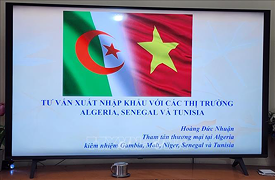
According to the Vietnam News Agency correspondent in Algiers, on March 26, the Vietnamese Trade Office in Algeria, which also covers Senegal and Tunisia, organized an export consultation session to these three markets for more than 40 Vietnamese agencies and businesses. This is a regular activity aimed at enhancing the provision of information about potential markets in Africa.
At the event, Mr. Hoang Duc Nhuan - Commercial Counselor - provided detailed information about the Algerian, Senegalese, and Tunisian markets, particularly in the import and export of agricultural products, seafood, wood products, textiles, leather goods, plastic raw materials, chemicals, etc., as well as important considerations regarding finding, trading, and making payments with partners in these three markets, and answered questions from participating businesses.
Regarding the Algerian market, Mr. Hoang Duc Nhuan stated that Vietnamese goods have many advantages when exporting to this market due to high import demand and a population of over 48 million people. The traditional political relationship between the two countries is good and was upgraded to a Strategic Partnership last year. Businesses from both sides are increasingly interested in each other's markets. Vietnamese goods are highly valued for their quality and price. Trade promotion agencies such as the Trade Office regularly organize activities to connect businesses from both sides.
Furthermore, Algeria and Vietnam both have embassies in each other's capitals, making it easier to issue visas for businesses...
In 2025, trade between the two countries saw a significant leap. Vietnam has many products with high export potential to Algeria, especially coffee. Algeria imports approximately 130,000 tons annually, mainly unprocessed robusta coffee. Vietnamese coffee accounts for over 50% of the Algerian market share, with about 70,000 tons and an average export value of $100 million per year. This product continues to have high demand in Algeria and will remain a key export item for Vietnam in the future. In addition, cashews, coconut flakes, and spices such as pepper, cinnamon, and star anise are also agricultural products with high demand in Algeria. Seafood is also among the top 5 export items from Vietnam to Algeria, with an export value of $9-10 million per year. Vietnamese pangasius fillets and tuna also have high competitiveness. Industrial goods such as automobiles, spare parts, textiles, sports shoes and raw materials, chemicals, etc., also have promising export prospects to Algeria.
Regarding the Senegalese market, according to Mr. Hoang Duc Nhuan, although it is a small market with a population of about 19 million people, compared to many other African countries, Senegal's economy is quite open and deeply integrated. Senegal has the advantage of a stable political situation, relatively good infrastructure, an international airport, a seaport, and serves as a transit point for goods to landlocked countries. The main export items to Senegal include rice, pepper, fruits and vegetables, etc. Each year, Senegal needs to import 900,000 - 1,000,000 tons of rice, mainly 100% broken rice.
Currently, there are many Vietnamese and Asian restaurants in Senegal. The Vietnamese community here is also quite large, creating opportunities for Vietnamese goods, especially dried goods like rice paper, rice crackers, and fish sauce, to penetrate this market more deeply.
Despite being a small country with an area of nearly 164,000 km2 and a population of approximately 13 million, Tunisia is one of the most dynamic and competitive economies in the African-Arab region, deeply integrated into the international community, and strategically located near Europe (only 140 km away). Tunisia is one of the pioneering countries in implementing the African Continental Free Trade Agreement (AfCFTA), which includes 54 member countries. Therefore, it can be considered a gateway for goods from other countries, including Vietnam, to enter the African-Arab market. Each year, Tunisia needs to purchase 30,000 tons of raw coffee, mainly robusta, 30,000 tons of rice, and 360,000 tons of sugar.
Although African countries offer significant export potential for Vietnamese businesses, import taxes are relatively high in some African countries, such as Algeria at 30%, not including VAT at 19%, withholding tax at 2%, and solidarity tax at 3%. Furthermore, Algeria also applies safeguard duties ranging from 30% to 200% depending on the product.
Mr. Hoang Duc Nhuan noted that when exporting to Algeria, Senegal, and Tunisia, Vietnamese businesses need to seek partners through reputable channels such as participating in trade promotion programs, international trade fairs and exhibitions, business forums, and direct business meetings; introductions from trade promotion agencies such as the Trade Office and familiar business partners... Before conducting transactions, businesses should request partners to provide business registration certificates, import/export cards, copies of passports, and identity cards of their representatives so that relevant agencies such as the Vietnamese Trade Office can provide advice and verification.
Regarding payment methods for exports, it is recommended to use irrevocable letters of credit confirmed by reputable European or American banks, or documentary collection methods requiring a deposit of 20% or more of the goods' value; deferred payment methods are not accepted. Furthermore, if importing goods from Africa to Vietnam, businesses need to have the goods inspected by a reputable international inspection organization in the importing country before loading them onto the ship. Vietnamese businesses should also try to negotiate with suppliers to avoid requiring deposits or to require only a minimum deposit. For initial orders, only small quantities should be purchased. Ideally, in the early stages, businesses should visit suppliers in person to meet with them, supervise the procurement process, and oversee the loading of goods onto the ship.
Furthermore, Mr. Hoang Duc Nhuan noted that Vietnamese businesses also need to understand the tastes and culture of consumers in Muslim countries, and pay attention to Halal certification (a certificate confirming that a product does not contain prohibited substances according to Islamic law) for foods made from livestock, poultry, or containing meat.
Source: TinTucNews
- USTR Makes Findings and Proposes Action in 60 Section 301 Investigations Relating to Failures to Take Action on Trade in Forced Labor Goods
- [VCCI] The US officially initiates a Section 301 Investigation into Vietnam on Intellectual property
- General Secretary and President To Lam's working visit to three ASEAN countries: Demonstrating the stature of proactive and constructive diplomacy.
- Viet Nam accelerates innovation drive as skilled workforce becomes key to science and technology growth
- The US is increasing controls on AI chip exports