


Most viewed articles


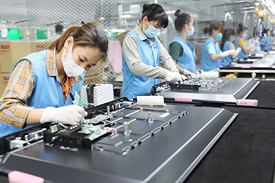
To attract high-quality foreign investment projects, Viet Nam needs to prepare a workforce that meets the requirements.
Focus on attracting high-quality FDI.
Resolution 50-NQ/TW of the Politburo on the orientation for perfecting institutions and policies to improve the quality and effectiveness of foreign investment cooperation by 2030 clearly states that the institutions and policies for foreign investment cooperation should be highly competitive and internationally integrated. At the same time, they should meet the requirements of reforming the growth model, restructuring the economy, protecting the environment, effectively addressing social issues, and improving the productivity, quality, efficiency, and competitiveness of the economy.
Furthermore, it is necessary to fundamentally address the existing limitations and shortcomings in the development, improvement, and implementation of institutions and policies on foreign investment cooperation. The goal is to create a business environment and competitiveness that ranks among the ASEAN 3 countries before 2030.
Regarding specific targets, Resolution 50-NQ/TW clearly states that the goal is to achieve registered foreign direct investment (FDI) of approximately US$200-300 billion (equivalent to US$40-50 billion per year) during the 2026-2030 period, with implemented FDI reaching US$150-200 billion (equivalent to US$30-40 billion per year).
"The percentage of businesses using advanced technology, modern management, protecting the environment, and aiming for high technology will increase by 50% by 2025 and 100% by 2030" - Resolution 50-NQ/TW clearly states.
According to the Foreign Investment Agency ( Ministry of Finance ), Viet Nam is a reliable destination for foreign investors thanks to its stable macroeconomic environment, consistent investment attraction policies, and continuously improving capabilities in the electronics and component manufacturing industries.
However, amidst the accelerating wave of manufacturing relocation to Southeast Asian countries, competition to attract FDI in the region is becoming increasingly fierce, requiring Viet Nam to continue shifting its focus from attracting large capital to attracting high-quality FDI. This includes concentrating on core technologies, innovation, value chain linkages, and increasing the localization rate.
Minister of Finance Nguyen Van Thang stated that, in order to achieve the goal of building the country into a developed nation by 2045, Viet Nam must shift the focus of attracting FDI to high-tech and innovative projects. Accordingly, Viet Nam will prioritize high-tech, innovative projects with high added value and environmental friendliness, instead of pursuing quantity at all costs.
Ensuring a high-quality workforce is ready for FDI projects.
Colin Blackwell, Head of the Human Resources Working Group at the Viet Nam Business Forum (VBF), believes that Viet Nam has achieved "extraordinary success" in attracting foreign direct investment and is now shifting from quantitative growth to qualitative growth.
Investors are now looking not only for cost efficiency, but also for competence, creativity, and adaptability. Viet Nam's next phase will be judged by how intelligently we combine human and artificial intelligence. Therefore, talent development in Viet Nam must be a long-term priority.
In fact, to meet the demand for high-quality human resources, in 2024, the Government issued Decision No. 1017/QD-TTg approving the Program "Development of human resources for the semiconductor industry until 2030, with orientation to 2050".
The decision sets a target that by 2030, Viet Nam will train and develop a high-quality workforce for the semiconductor industry, focusing on semiconductor chip design, packaging, and testing; gradually mastering the technology in semiconductor manufacturing; and training at least 50,000 personnel with university degrees or higher to serve the semiconductor industry across all stages of the semiconductor industry value chain.
By 2050, Viet Nam will have a strong workforce, integrated into the global semiconductor industry value chain; capable of meeting the development requirements of the semiconductor industry in terms of both quality and quantity.
In particular, to meet the demand for high-quality human resources to serve domestic and foreign investment projects, the National Innovation Center (Ministry of Finance) is currently coordinating programs with technology companies, research institutes, universities, and domestic and foreign partners to train human resources in the fields of semiconductors and artificial intelligence.
Besides training high-quality domestic human resources, to ensure the workforce needs of high-quality FDI projects, Colin Blackwell believes that Viet Nam needs effective international knowledge transfer. With investments in areas such as international financial centers, advanced technology, and AI coming to Viet Nam, bringing in foreign experts is essential. They are not replacing local experts but are coming to train, transfer skills, and build future capacity.
Source: Industry and Trade Review
- USTR Makes Findings and Proposes Action in 60 Section 301 Investigations Relating to Failures to Take Action on Trade in Forced Labor Goods
- [VCCI] The US officially initiates a Section 301 Investigation into Vietnam on Intellectual property
- General Secretary and President To Lam's working visit to three ASEAN countries: Demonstrating the stature of proactive and constructive diplomacy.
- Viet Nam accelerates innovation drive as skilled workforce becomes key to science and technology growth
- The US is increasing controls on AI chip exports