


Most viewed articles


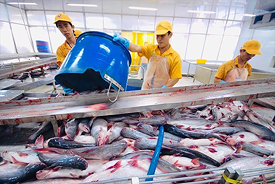
In the first few months of the year, the pangasius industry received many positive signals as global market demand gradually recovered and domestic raw fish prices improved. Against the backdrop of a continuing contraction in the supply of naturally caught whitefish, pangasius exports are expected to reach approximately $2.3 billion.
Exports accelerate, raw material prices rise again.
According to the Viet Nam Association of Seafood Processing and Export (VASEP), pangasius (catfish) recorded outstanding growth in the seafood export picture at the beginning of 2026. In January alone, pangasius exports reached US$212 million, a 59% increase compared to the same period in 2025, indicating that import demand in many markets remains positive.
In terms of markets, China continues to be the biggest bright spot thanks to increased consumer demand during the festive season and Lunar New Year, with a turnover of $68 million, a 135% increase compared to the same period last year and accounting for approximately 32% of the total turnover.
Despite signs of recovering demand, the US market has yet to see a significant breakthrough. Pangasius exports to the US reached $20 million, a 13% increase and accounting for approximately 9% of total export value. Meanwhile, Brazil continues to emerge as a positive growth market, reaching $18 million, a 47% increase compared to the same period last year.
In terms of product structure, pangasius exports still mainly depend on frozen goods under HS code 03, reaching US$209 million, accounting for 98.4% of total export value and increasing by 61% compared to the same period last year. Of this, frozen pangasius fillets (HS0304) reached US$175 million, continuing to play a key role as the main export item.
Alongside positive signals from the export market, the price of raw pangasius in the domestic market has recorded a clear upward trend. Many export businesses report that demand from major markets is showing signs of recovery, contributing to the upward momentum of domestic raw pangasius prices. In the first few months of the year, the price of raw pangasius in the Mekong Delta was around 33,000 - 34,000 VND/kg, significantly higher than the same period last year. This price level helps farmers improve their profits after a long period of pressure from costs and low selling prices, while also contributing to stabilizing production sentiment in key farming areas.
Many favorable market factors
According to VASEP Deputy Secretary General Le Hang, this year the pangasius industry is expected to have many opportunities as the global supply of naturally caught whitefish continues to shrink.
Global whitefish production is estimated to reach just over 6.5 million tons, a decrease of approximately 145,000 tons compared to 2025. This trend forces importers, especially in the EU, to seek alternative sources of supply with more stable prices. In this context, Vietnamese pangasius is a suitable choice in the competitive whitefish segment.
Besides supply and demand factors, changes in US trade policy can also positively impact market sentiment. After the US Supreme Court overturned the previous retaliatory tariffs, the Trump administration decided to impose a general 10% tariff on imported goods from all countries. This adjustment somewhat improves the price advantage of Vietnamese pangasius in the US market. However, competing whitefish products such as pollock, cod, and tilapia also enjoy the same tariff rate, so this advantage is not decisive.
Based on favorable market conditions, pangasius export turnover in 2026 is projected to reach US$2.3 billion. However, VASEP emphasizes that, in the context of a volatile global market, diversifying markets, reducing dependence on large markets, and effectively utilizing free trade agreements (FTAs) are crucial factors for the pangasius industry to maintain sustainable growth. Along with this, it is necessary to focus on enhancing the brand value of Vietnamese pangasius.
In key pangasius farming areas such as Dong Thap and An Giang , local authorities are actively supporting farmers in accessing new techniques, reducing input costs, and improving production efficiency. At the same time, they advise against rapidly expanding farming areas, even though pangasius prices are currently high. Rapid expansion could lead to oversupply in subsequent cycles, posing risks to both farmers and processing businesses. Instead, farmers should adhere to seasonal schedules, control stocking densities, and strengthen supply chain linkages with businesses to ensure stable output.
Source: People's Deputies Newspaper.
- USTR Makes Findings and Proposes Action in 60 Section 301 Investigations Relating to Failures to Take Action on Trade in Forced Labor Goods
- [VCCI] The US officially initiates a Section 301 Investigation into Vietnam on Intellectual property
- General Secretary and President To Lam's working visit to three ASEAN countries: Demonstrating the stature of proactive and constructive diplomacy.
- Viet Nam accelerates innovation drive as skilled workforce becomes key to science and technology growth
- The US is increasing controls on AI chip exports