


Most viewed articles


President Donald Trump said the US will impose different tariffs on different countries, after the US Supreme Court rejected the legal basis for the previous tariffs.
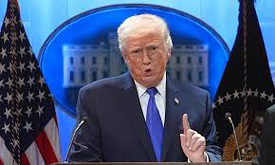
On March 3, US President Donald Trump said the government would apply “different tariffs” to “different countries,” after the US Supreme Court last month invalidated reciprocal tariffs imposed individually on US trading partners.
Speaking to reporters during a meeting with German Chancellor Friedrich Merz at the White House, Trump said the US government is developing new tariffs to replace those recently rejected, in order to maintain its tariff policy following the Supreme Court ruling.
On February 20, the U.S. Supreme Court ruled against President Trump's use of the International Emergency Economic Powers Act of 1977 (IEEPA) as the legal basis for imposing retaliatory tariffs and other taxes. The Supreme Court upheld the lower court's ruling, stating that the IEEPA does not grant the president the authority to impose these tariffs.
According to Trump, the U.S. government has a maximum of five months to impose the 15% tariff under Section 122 of the Trade Act of 1974, after the Supreme Court rejected the tariffs based on the IEEPA. He said, “During that time, we are conducting a lot of research and related work, and will be implementing new tariffs – different tariffs for each country.”
On February 24, the Trump administration began imposing a 10% global tariff under Section 122. This tariff could increase to 15%, as previously warned by Trump. U.S. Trade Representative Jamieson Greer also announced plans to conduct trade investigations under Section 301 of the Trade Act of 1974. He stated that these investigations are expected to cover “most major trading partners.” According to Greer, Section 301 allows the Office of the U.S. Trade Representative to investigate trade practices deemed “unfair” on a country-by-country basis.
Source: VTV
- USTR Makes Findings and Proposes Action in 60 Section 301 Investigations Relating to Failures to Take Action on Trade in Forced Labor Goods
- [VCCI] The US officially initiates a Section 301 Investigation into Vietnam on Intellectual property
- General Secretary and President To Lam's working visit to three ASEAN countries: Demonstrating the stature of proactive and constructive diplomacy.
- Viet Nam accelerates innovation drive as skilled workforce becomes key to science and technology growth
- The US is increasing controls on AI chip exports