


Most viewed articles


In an interview with the Global Times, Jim Sutter, CEO of the U.S. Soybean Export Council (USSEC), stated that China is the largest and irreplaceable customer for U.S. soybeans.
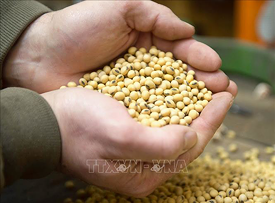
These remarks underscore the importance of the Chinese market to the U.S. soybean industry, coming amid positive trends in U.S.-China trade, in which soybeans account for a significant portion. According to the latest data from USSEC, a total of 22.6 million tons of U.S. soybeans were exported to China in the 2024/25 crop year. Jim Sutter expressed "cautiously optimistic" that U.S. soybean exports to China could remain stable at around 20 million tons per year, thanks to the high complementarity between the two sides, as China has long been a key market for the U.S. soybean industry.
Jim Sutter said, "We've been operating in China for over 40 years, and for the past several decades, China has consistently been our largest export destination, typically accounting for about half of all U.S. soybean exports each year—amounting to billions of dollars in value for American farmers and the entire supply chain." He emphasized that this trade supports jobs not only on farms but also in rural communities, transportation, export ports, and related service industries across the United States.
According to Jim Sutter, China relies heavily on imports to meet its soybean needs, purchasing the majority of its soybean supply for livestock farming, aquaculture, and the food industry. This creates a deeply interdependent relationship: American farmers depend on China as a key customer, while Chinese feed and food companies depend on the U.S. as a reliable, high-quality supplier.
He stated that the U.S.-China soybean trade relationship is central to maintaining farmers' incomes and economic opportunities in the U.S., as well as food and feed security in China.
According to China's General Administration of Customs, last year, China-US trade showed signs of stabilization after several rounds of bilateral tariff negotiations, with China's trade volume with the US exceeding 4 trillion yuan (US$573 billion), accounting for 8.8% of China's total import and export value in 2025.
Jim Sutter emphasized that from the perspective of the U.S. soybean industry, a stable and predictable U.S.-China economic and trade relationship is essential, noting that as tariffs, retaliatory duties, and policy uncertainty escalate, U.S. soybean exports to China have plummeted, and this volatility has made it very difficult for American farmers and exporters to plan and invest for the future. With access to a stable market, confidence and trade opportunities for both sides will increase.
He said China has fulfilled most of its commitments, including meeting its first agreement to buy 12 million tons of U.S. soybeans, and that this is restoring confidence from the U.S. side. Jim Sutter expressed optimism about soybean trade with China, stating that China remains the most important export market for the U.S. and that American farmers are keen to maintain long-term relationships with Chinese buyers.
Source: Tin Tuc News
- USTR Makes Findings and Proposes Action in 60 Section 301 Investigations Relating to Failures to Take Action on Trade in Forced Labor Goods
- [VCCI] The US officially initiates a Section 301 Investigation into Vietnam on Intellectual property
- General Secretary and President To Lam's working visit to three ASEAN countries: Demonstrating the stature of proactive and constructive diplomacy.
- Viet Nam accelerates innovation drive as skilled workforce becomes key to science and technology growth
- The US is increasing controls on AI chip exports