

Most viewed articles


Favorable tax policies help the shrimp industry take advantage of opportunities to expand markets, invest in technology, and improve product quality.
In the US market, Vietnamese shrimp exporters have just received good news as the anti-dumping duty has been sharply reduced to 4.58%, much lower than the previously announced rate of 35.29%, according to the results of the 19th administrative review by the US.
Being subject to low anti-dumping duties is a significant advantage for Viet Nam's shrimp industry to thrive this year. Many businesses in the Mekong Delta are welcoming this positive news.
The United States is currently one of the largest export markets for Viet Nam Clean Seafood Joint Stock Company. The significant reduction in tariffs not only eases financial pressure but also provides an opportunity for the factory to increase capacity and expand its market.
Mr. Vo Van Phuc, General Director of Viet Nam Clean Seafood Joint Stock Company, said: "We have received positive information regarding the anti-dumping tax on shrimp. With this rate, Vietnamese farmers and businesses can still maintain access to the US market in the coming period."
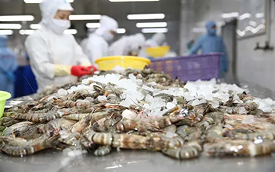
Ca Mau province has the largest shrimp farming area in the country, with over 430,000 hectares. Currently, the province has nearly 90 seafood processing and export businesses, with a scale of over 600,000 tons per year. The significant reduction in import taxes compared to before will mean lower import costs for shrimp into the United States, opening up opportunities for Vietnamese shrimp to compete more strongly with other countries.
Mr. Nguyen Chi Thien, Director of the Department of Industry and Trade of Ca Mau province, said: "For businesses that are exporting, we are encouraging and supporting them to improve technology, enhance quality, and produce according to a circular model, utilizing recycled by-products to process new raw materials to meet increasingly stringent markets regarding emission reduction."
The significant reduction in US import tariffs is opening up bright prospects for Viet Nam's shrimp industry. If this opportunity is well-utilized to enhance competitiveness, build brand recognition, and meet international standards, Ca Mau shrimp in particular, and Vietnamese shrimp in general, will continue to assert their position in one of the world's largest and most important shrimp import markets.
Source: VTV
- USTR Makes Findings and Proposes Action in 60 Section 301 Investigations Relating to Failures to Take Action on Trade in Forced Labor Goods
- [VCCI] The US officially initiates a Section 301 Investigation into Vietnam on Intellectual property
- General Secretary and President To Lam's working visit to three ASEAN countries: Demonstrating the stature of proactive and constructive diplomacy.
- Viet Nam accelerates innovation drive as skilled workforce becomes key to science and technology growth
- The US is increasing controls on AI chip exports