
Most viewed articles


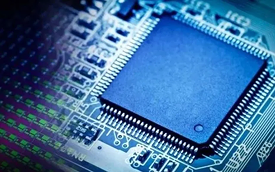
South Korea will negotiate with the US to reach favorable agreements on tariffs for memory chips exported to the US.
CNBC quoted a South Korean government spokesperson as saying that the country will negotiate with the United States to reach favorable agreements on tariffs for memory chips exported to the US.
The official said that in 2025, South Korea will release a summary of the overall data on the trade agreement with the U.S. This includes provisions ensuring that South Korea will not suffer disadvantageous treatment from U.S. tariffs on imported chips compared to its main competitors. Previously, on January 17th, the South Korean Trade Minister stated that the U.S. tariffs on some advanced computing chips would have only a limited impact on South Korean companies. Samsung Electronics and SK Hynix of South Korea are currently the world's largest memory chip manufacturers.
Regarding this issue, on January 15th, the South Korean government convened an emergency meeting to assess the impact of the US plan to impose a 25% tariff on certain imported semiconductor products, and to discuss countermeasures to protect the domestic chip industry.
According to Yonhap News Agency, the meeting, chaired by Minister of Industry, Trade and Energy Kim Jung Kwan, took place just hours after the Trump administration announced plans to impose a 25% tariff on certain types of artificial intelligence (AI) chips temporarily imported and re-exported to the US market. Speaking at the meeting, Minister Kim Jung Kwan stated that he would seek ways to minimize the negative impact of the new US tariffs, while also gathering opinions and engaging closely with businesses in the semiconductor and key mineral sectors affected by the new regulations.
According to a statement from Washington on January 14, the aforementioned 25% tariff does not apply to chips used in data centers located in the United States, nor to consumer chip products unrelated to domestic data centers. In addition, the US also announced adjustments to imports of processed critical minerals and related derivatives.
Following this unexpected development, South Korean Trade Minister Yeo Han Koo, who was on a trip to the United States, decided to extend his stay to discuss solutions. Meanwhile, Vice Minister of Trade Park Jung Sung is expected to hold a phone call with U.S. Undersecretary of Commerce for Industry and Security Jeffrey Kessler to express concerns and discuss related measures.
Under the bilateral tariff agreement reached last year, the U.S. agreed to impose tariffs on South Korean semiconductors no higher than those on its direct competitors.
Source: VTV
- USTR Makes Findings and Proposes Action in 60 Section 301 Investigations Relating to Failures to Take Action on Trade in Forced Labor Goods
- [VCCI] The US officially initiates a Section 301 Investigation into Vietnam on Intellectual property
- General Secretary and President To Lam's working visit to three ASEAN countries: Demonstrating the stature of proactive and constructive diplomacy.
- Viet Nam accelerates innovation drive as skilled workforce becomes key to science and technology growth
- The US is increasing controls on AI chip exports