
Most viewed articles


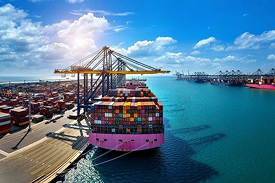
Amidst volatile global trade, increasingly fierce competition, and constantly changing market rules, import and export continue to be identified as one of the key drivers of Viet Nam's economic growth. However, to maintain high and sustainable growth, exports cannot rely solely on expanding scale but must shift strongly towards a model of in-depth development, linked to new trade methods, sustainable standards, and increased added value.
Lesson 1: Import and Export - Pillars of Growth and New Challenges
During the period 2020-2025, Viet Nam's import and export activities marked a particularly impressive development, becoming one of the most important pillars of economic growth and macroeconomic stability. Despite unprecedented shocks from the COVID-19 pandemic, geopolitical conflicts, supply chain disruptions, and increasing protectionist trends, Viet Nam's international trade not only remained stable but also experienced strong growth, affirming its position as a highly open economy with increasingly better adaptability.
According to Mr. Nguyen Anh Son, Director of the Import-Export Department ( Ministry of Industry and Trade ), over the past five years, Viet Nam's average export growth rate has reached approximately 10% per year, a high growth rate amidst the slow recovery and instability of global trade. Notably, since 2023, Viet Nam has officially joined the group of the top 20 largest export economies in the world, a milestone demonstrating the increasing scale and position of Vietnamese goods in the international market.
Beyond just growth in scale, import and export activities also play a crucial role in macroeconomic stability. Viet Nam has maintained a continuous trade surplus for 10 years, from 2016 to the present. This stable foreign exchange supply from the trade surplus helps reduce pressure on the exchange rate, strengthens national foreign exchange reserves, and creates flexibility for monetary policy management. In the context of a highly open economy like Viet Nam's, this is a key factor in maintaining macroeconomic stability.
In the first 11 months of 2025 alone, the country's export turnover reached US$430.2 billion, an increase of 16.1% compared to the same period last year. It is projected that for the whole year of 2025, exports could exceed US$470 billion, an increase of approximately 16% compared to 2024. These figures not only reflect the recovery of global demand but also demonstrate the significant progress made by Vietnamese businesses in terms of production capacity, supply chain organization, and market access.
However, according to Director Nguyen Anh Son, behind those bright prospects lie numerous new challenges that are emerging.
On the international stage, the global trade environment is changing rapidly and unpredictably. Slow global economic recovery, geopolitical conflicts, trade fragmentation, supply chain shifts, and increasing protectionism in various forms are narrowing traditional growth opportunities. In particular, new standards for sustainable development, emission reduction, traceability, social responsibility, and "greening" supply chains are becoming increasingly mandatory, putting significant pressure on export businesses, especially small and medium-sized enterprises (SMEs).
From a domestic perspective, Viet Nam's import and export activities also reveal structural bottlenecks. Export growth still heavily relies on the foreign direct investment (FDI) sector, while domestic enterprises have not yet deeply participated in the high value-added stages of the global production and distribution chain. Many key export sectors are still significantly dependent on imported raw materials and components, making the economy vulnerable to external shocks and the risk of supply chain disruptions.
Furthermore, Vietnamese businesses still have limited capabilities in design, international marketing, and branding. Their ability to meet technical standards, green standards, and standards of high-end markets is not yet truly robust. These factors contribute to low domestic value added in exports, despite continuously increasing nominal export value.
Restructuring export growth drivers is required.
Analyzing the role of import and export in more detail, Dr. Vo Tri Thanh, Director of the Institute for Strategic Studies, Brand and Competition, argues that it is necessary to fully and correctly understand the nature of international trade in the new context. According to him, for many years, public opinion has often viewed exports through a rather simplistic lens, mainly comparing growth rates or differences in export value between years. This approach easily leads to biased assessments, even denying the role of exports when growth rates slow down.
Taking exports as an example, with a scale of approximately $450 billion, Dr. Vo Tri Thanh analyzed that even if the domestic value-added ratio only reaches about 20%, the direct contribution to GDP would still amount to nearly $90 billion – a very large figure compared to the current GDP size. This shows that exports are both a major plus for growth and a requirement to improve the quality and content of added value.
According to this expert, imports and exports not only contribute directly to growth but also create significant spillover effects on macroeconomic stability and long-term production capacity. Approximately 35-40% of Viet Nam's import value consists of machinery and equipment, representing investment in technology and future production capacity. Therefore, imports are not a "weakness," but an indispensable component in enhancing the competitiveness of the economy.
From the above analysis, it can be seen that Viet Nam's import and export sector is at a crucial turning point. In the context of the Party and State setting a target of double-digit economic growth in the coming years, exports need to continue playing a key role as a driving force, but they cannot follow the old path. The requirement is to shift strongly from extensive growth to intensive, more efficient, and sustainable growth.
This necessitates a restructuring of export growth dynamics, where new trade methods, particularly cross-border e-commerce, are emerging as a promising direction.
Source: Government News
- USTR Makes Findings and Proposes Action in 60 Section 301 Investigations Relating to Failures to Take Action on Trade in Forced Labor Goods
- [VCCI] The US officially initiates a Section 301 Investigation into Vietnam on Intellectual property
- General Secretary and President To Lam's working visit to three ASEAN countries: Demonstrating the stature of proactive and constructive diplomacy.
- Viet Nam accelerates innovation drive as skilled workforce becomes key to science and technology growth
- The US is increasing controls on AI chip exports