


Most viewed articles


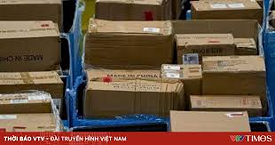
The surge in the volume of small parcels is overwhelming the French government's control system.
According to La Tribune, the wave of cross-border e-commerce is posing a serious challenge to France's economic sovereignty and production capacity, as the number of small parcels imported from outside the European Union (EU), mainly from China, is expected to skyrocket to nearly 800 million units in 2024, with increasingly low values and almost beyond the control of authorities.
A report published on December 17th by the National Agency for Foreign Trade Statistics and the General Directorate of Customs of France shows that in 2024, the total number of small parcels imported into France reached 773 million units, more than four times the 170 million units of 2022. This development reflects a profound shift in the global supply chain, as manufacturers – mainly in China – deliver goods directly to consumers, bypassing traditional intermediaries.
The surge in the volume of small parcels is overwhelming the French state's inspection system. According to European Commission figures, across the EU, an average of only 82 products are physically inspected per 1 million imported items, equivalent to approximately 0.008%. In France, the Directorate General for Competition, Consumer Affairs and Fraud Prevention (DGCCRF) acknowledges that it can only inspect less than 1% of the total volume of imported industrial products.
More concerning, targeted inspections revealed very high levels of violations. In customs inspections in 2022, up to 96% of inspected products were non-compliant or counterfeit. Recent campaigns in November 2025 continued to yield similar results, with approximately 8 out of 10 products failing to meet EU safety and quality standards.
The segment of parcels valued under €150 (approximately $176) – which are exempt from import duties – is currently the main driver of this trend. Three Chinese e-commerce platforms, Shein, Temu, and AliExpress, account for around 73% of the market share in this segment. China now supplies up to 97% of all small parcels imported into the EU, a sharp increase from 86% in 2022.
Along with that, the average value of imported goods has fallen rapidly. In just three years, the average price has halved, from 11.3 euros to 6.4 euros. Currently, half of imported parcels are priced below 3.4 euros, and even 25% are priced below 1.6 euros – a price point where domestic producers find it difficult to compete, especially when having to comply with increasingly stringent standards.
The consequences for French industry are considered serious. The textile industry, which employed around 400,000 people in the 1970s, now has only about 60,000. In 2024 alone, approximately 1,500 clothing stores closed. A similar situation occurred in the dental industry, with 800 businesses withdrawing from the market in just two years, as well as in the furniture industry, where the proportion of domestically produced products has halved in the last 20 years. In 2024 alone, imports of small parcels are estimated to have caused a trade deficit of at least 4.2 billion euros for France.
Faced with this situation, France is pushing for legislative and administrative measures to re-establish control. One of the key proposals, approved by the Senate as part of the 2026 budget, is to impose a 5 euro tax on each small parcel imported from outside the EU. This measure precedes the European Customs Union's reform plan, scheduled to take effect on July 1, 2026, which would eliminate tax exemptions for goods under 150 euros and impose a fixed tax of 3 euros per item.
Simultaneously, the French Parliament is also considering increasing the legal liability of e-commerce platforms. According to a report by the investigation delegation on import control, online marketplaces could be held directly responsible for substandard products if the third-party seller cannot be identified, and could even face suspension of operations in cases of serious and repeated violations.
Environmental issues have also been brought to the forefront of policy. Given that 56% of France's carbon emissions come from imports, MPs proposed allocating up to half of administrative inspection resources to imports, ensuring that products from abroad meet the same environmental and health standards as domestically produced goods.
Source: VTV
- USTR Makes Findings and Proposes Action in 60 Section 301 Investigations Relating to Failures to Take Action on Trade in Forced Labor Goods
- [VCCI] The US officially initiates a Section 301 Investigation into Vietnam on Intellectual property
- General Secretary and President To Lam's working visit to three ASEAN countries: Demonstrating the stature of proactive and constructive diplomacy.
- Viet Nam accelerates innovation drive as skilled workforce becomes key to science and technology growth
- The US is increasing controls on AI chip exports