
Most viewed articles


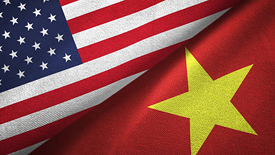
Since Viet Nam and the US established diplomatic relations in 1995, shared strategic and economic interests have propelled both countries to expand their cooperation across numerous issues. We discuss bilateral trade and investment relations between Viet Nam and the US and prospects in light of their recently formed Comprehensive Strategic Partnership.
Despite recent challenges and uncertainties, the economic relationship between the US and Viet Nam has continued to strengthen through proactive engagements from both parties. Following the signing of a trade agreement framework in October, Viet Nam and the United States recently concluded the fifth round of direct negotiations with encouraging progress. From November 12 to 14, the Vietnamese delegation, led by Minister of Industry and Trade Nguyen Hong Dien, held discussions with officials from the Office of the US Trade Representative (USTR).
Over three intensive days, negotiators made notable progress on key issues, including services, digital trade, agriculture, technical barriers, and sanitary and phytosanitary standards. Both sides also narrowed differences in other complex areas.
The developments were reinforced by an optimistic trade update: the US remained Viet Nam’s largest export market in the first ten months of 2025, accounting for over 30 percent of the country’s total shipments. This underscores the resilience and momentum of bilateral trade and investment, with Viet Nam ranking the US as its second-largest trade partner and primary export destination, while the US lists Viet Nam as its eighth-largest trading partner.
In this article, we look at the latest data on Viet Nam-US two-way trade and investment and provide an overview of their various bilateral tax and investment treaties.
Diplomatic relations
Viet Nam established diplomatic relations with the US in 1995, marking a significant milestone in the bilateral relationship. Following the normalization of relations, the two countries quickly moved to expand their cooperation across various sectors. The first official visit by a high-ranking Vietnamese official to the US soon followed, setting the stage for enhanced diplomatic and economic exchanges.
Diplomatic representations were established in both countries, with the US opening its embassy in Hanoi and Viet Nam establishing its embassy in Washington, D.C. Significant progress was made when the first resident Ambassador of the US to Viet Nam was appointed in 1997, cementing the diplomatic presence.
Important milestones in the relationship include high-level visits and agreements aimed at strengthening ties. For example, in 2000, President Bill Clinton’s visit to Viet Nam was a historic event that paved the way for increased cooperation. The establishment of a Consulate General in Ho Chi Minh City further enhanced the US presence and engagement in Viet Nam.
The bilateral relationship saw a major boost in 2013 when the two countries signed a comprehensive partnership agreement, highlighting their commitment to deepening cooperation in various fields, such as trade, education, and security. This was followed by the historic visit of General Secretary Nguyen Phu Trong to the US in 2015, marking the first visit by a top Vietnamese leader to the country since normalization.
In September 2023, Viet Nam’s General Secretary Nguyen Phu Trong and US President Joe Biden convened in Hanoi to advance their nations’ relationship to a Comprehensive Strategic Partnership, highlighting peace, cooperation, and sustainable development. The US expressed its support for Viet Nam’s development as a strong, independent, and prosperous nation.
Viet Nam and the US have established strong trade ties that have seen substantial growth over time, bolstered by numerous significant developments further enhancing their economic relationship.
Viet Nam-US trade
In 2024, US goods trade with Viet Nam totaled approximately US$149.6 billion, as reported by the Office of the US Trade Representative (USTR). US exports to Viet Nam totaled US$13.1 billion, representing a 32.9 percent increase of US$3.2 billion compared to 2023.
Meanwhile, imports from Viet Nam to the US totaled US$136.6 billion, representing a 19.3 percent increase (US$22.1 billion) from the previous year. Consequently, the US goods trade deficit with Viet Nam expanded to US$123.5 billion in 2024, representing an 18.1 percent increase (US$18.9 billion) over 2023.
Viet Nam's goods exports to the US
The US remains Viet Nam's largest export market, accounting for more than 30 percent of the Southeast Asian country’s total shipments.
Notably, several key product groups recorded breakthrough growth in the first 10 months of 2025:
- Computers, electronics, and components led with the strongest increase in a decade, surging by nearly 78 percent to over US$34 billion. The growth was driven by rising demand for AI servers, tech hardware, and semiconductor-related components.
- Machinery and equipment maintained stable growth of 9.2 percent, reaching US$19.6 billion.
- Phones and parts posted a slight uptick to US$9.02 billion after two years of stagnation.
- Textiles and garments, one of Viet Nam’s traditional export pillars, recovered strongly with US$14.81 billion, up 11.4 percent.
- The toys and sporting goods category was a standout category, which jumped more than 255 percent from US$1.47 billion to US$5.24 billion. The push was rooted in a new wave of US buyers shifting orders away from China.
- Wood and wooden products reached US$7.8 billion, up 6 percent.
Besides the main exports, other commodity groups also experienced significant growth. Transport vehicles and spare parts increased by nearly 11 percent, while exports in agriculture and aquaculture showed a strong rebound. Notably, Viet Nam’s agricultural and aquaculture exports to the US include:
- Fruit and vegetables, which grew by 58.5 percent;
- Coffee, which surged over 60 percent due to high global prices;
- Rubber products, which rose by 51 percent; and
- Seafood exports, which recovered by 7.5 percent after a long decline, as US inventories sharply decreased and demand for high-quality products increased.
Viet Nam’s goods imports from the US
Viet Nam’s imports from the United States hit a record high in the first ten months of 2025, totaling US$15.23 billion – an increase of 23.7 percent, or US$2.92 billion, compared to the same period last year.
In the first ten months of 2025, Viet Nam imported US$1.64 billion of raw materials for the textiles, garments, and footwear industries from the United States, including fabrics, cotton, various textile fibers, and auxiliary materials – a 54.7 percent year-on-year increase.
During the same period, US soybean exports to Viet Nam reached 773,000 tons, valued at US$350 million, accounting for 35 percent of Viet Nam’s total soybean imports. According to the US Soybean Export Council (USSEC), Viet Nam remains one of the fastest-growing markets for US soybeans and is currently the third-largest buyer in Southeast Asia, with demand expected to rise further as the food processing and animal feed sectors expand.
Services trade
According to the USTR, total services trade between the US and Viet Nam reached an estimated $5.6 billion in 2024. Of this amount, US service exports to Viet Nam rose by 15.3 percent year-on-year, totaling $3.6 billion. Simultaneously, imports from Viet Nam increased by 39.5 percent, reaching $1.9 billion. As a result, the US services trade surplus was $1.7 billion, which represents a decrease of 3.9 percent compared to 2023.
This trend underscores Viet Nam’s expanding capacity to deliver services that meet US demand, thereby strengthening bilateral economic ties.
The growing services trade between Viet Nam and the US signifies a deepening economic relationship, in which both countries benefit from enhanced cooperation and mutual exchange. As Viet Nam continues to advance its services sector capabilities, particularly in areas like travel, transportation, and financial services, opportunities for further growth and collaboration between the two countries are expected to flourish.
American direct investments into Viet Nam
Foreign direct investment (FDI) is crucial for Viet Nam’s economic growth, prompting the government to implement policies that encourage export-oriented manufacturing. While the United States is a significant potential source of large-scale investments, US direct investments in Viet Nam remain relatively modest.
As of 2025, the US ranked 11th among foreign investors in Viet Nam, with nearly US$12 billion in registered capital. However, this does not mean that the US investment presence in Viet Nam is insignificant. In fact, actual US investment is likely much higher when considering third-country flows, indirect investments, technology partnerships, and supply chain activities that fall outside of formal FDI licenses.
The US “friendshoring” strategy, focusing on relocating US supply chains to stable, friendly countries, is positioning Viet Nam as a priority destination. US investment brings not only capital and technology but also governance standards, ESG practices, and stronger links to global markets. Concurrently, American firms are increasingly asserting their presence in Viet Nam, targeting sectors from consumer goods and manufacturing to chip production, clean energy, and banking.
Prominent US companies such as Citigroup, Apple, Intel, Nike, Chevron, Ford, Coca-Cola, and KFC have long-term investments and operations in Viet Nam. However, new entrants are reshaping the US investment landscape in the country by focusing on high-tech and high-value-added industries. Several US companies in various sectors have entered Viet Nam, including:
- Intel, Amkor Technology, Synopsys, Marvell, and Nvidia, which operate major chip assembly, design, and AI centers;
- Cisco, HP, and Dell, which maintain research and development (R&D) and software hubs;
- ExxonMobil, GE Vernova, AES, and Excelerate Energy, which lead projects in liquefied natural gas (LNG), wind, and gas, supporting Viet Nam’s green transition;
Warburg Pincus, JPMorgan, and BlackRock, which are active in banking, fintech, and investment markets; and
- Boeing, Bell Textron, Pfizer, Amazon, and UPS, which are enhancing Viet Nam’s aerospace, healthcare, and logistics sectors by bringing technology, governance standards, and global market connections.
Bilateral trade, investment, and tax treaties
US-Viet Nam Trade and Investment Framework Agreement (TIFA)
In 2007, Viet Nam and the US entered into a Trade and Investment Framework Agreement (TIFA), establishing a strategic framework and principles for discussions on trade and investment issues between the two countries.
The agreement led to the creation of the US-Viet Nam Council on Trade and Investment. This council includes representatives from both parties and is co-chaired by the Office of the US Trade Representative (USTR) and Viet Nam’s Ministry of Trade. The council is vested with the power to:
- Monitor trade and investments between parties, identify opportunities for expanding trade and investments, and identify relevant issues that may be appropriate for negotiation in an appropriate forum.
- Consider specific trade and investment matters of interest to the parties, including issues under the Bilateral Trade Agreement.
- Identify and work to remove impediments to trade and investment between the parties.
- Establish ad-hoc working groups on specific issues, where appropriate and agreed upon by the parties, to facilitate its work.
- Seek the advice of the business community and civil society, where appropriate, on matters related to the council’s work.
Bilateral Trade Agreement (BTA)
Viet Nam and the US signed a BTA in 2001, which took almost 5 years to negotiate, committing both countries to ensuring fair market access for each other’s products, businesses, and nationals.
The BTA granted Viet Nam “conditional most favored nation (MFN) trade status,” also known as “normal trade relations” (NTR). On December 29, 2006, President George W. Bush conferred permanent normal trade relations (PNTR) status on Viet Nam, a crucial step in Viet Nam’s accession to the World Trade Organization (WTO).
This significantly lowered tariffs on Vietnamese products. In return, Viet Nam pledged to reform its trade and investment regulations to create a fairer environment for US businesses and products, with many commitments being phased in over several years to accommodate Viet Nam’s economic transition.
Nevertheless, it must be noted that shortly after extending NTR status to Viet Nam in 2001, the US government designated Viet Nam as a “nonmarket economy” (NME) for the purposes of antidumping and countervailing duty (AD/CVD) cases – a designation that the Vietnamese government has long sought to remove. The US Department of Commerce will complete its review in late July this year.
Viet Nam-US double taxation treaty
In 2015, Viet Nam and the US signed a double taxation treaty that was ratified by Viet Nam but not by the US due to changes in its own tax code in 2020, necessitating a renegotiation of the treaty.
The agreement covers US federal income taxes levied under the Internal Revenue Code (excluding social security and unemployment taxes), as well as US federal taxes imposed on the investment income of foreign private foundations. Additionally, it addresses Viet Nam’s personal income tax and business income tax.
The treaty outlines regulations on capital gains taxes and withholding taxes on dividends, interest, and royalties, and specifies the limitation of benefits.
Conclusion
The strengthening of diplomatic and economic ties between Viet Nam and the US since the establishment of relations in 1995 has led to significant bilateral trade growth. The recent advancement to a Comprehensive Strategic Partnership indicates a commitment to further cooperation across various sectors. With the US remaining Vietnam’s largest export market, continued collaboration across trade, investment, and technology is expected to bolster both economies in the years to come. The recent negotiations reflect a positive trajectory, paving the way for a robust and mutually beneficial partnership.
Should the momentum of strengthening trade, investment, and diplomatic relations persist, both nations stand to realize shared growth and prosperity in the future.
Source: Vietnam Briefing
- USTR Makes Findings and Proposes Action in 60 Section 301 Investigations Relating to Failures to Take Action on Trade in Forced Labor Goods
- [VCCI] The US officially initiates a Section 301 Investigation into Vietnam on Intellectual property
- General Secretary and President To Lam's working visit to three ASEAN countries: Demonstrating the stature of proactive and constructive diplomacy.
- Viet Nam accelerates innovation drive as skilled workforce becomes key to science and technology growth
- The US is increasing controls on AI chip exports