
Most viewed articles


Vietnam is emerging as a dynamic regional manufacturing and export hub, highly regarded by international corporations for its stable business environment, quality workforce and flexible adaptability.
However, in the strategy of expanding into international markets, Vietnamese enterprises are facing many challenges, especially environmental challenges and green transformation.
Opportunities from global supply chains
Vietnam is becoming a new focal point of the global supply chain, with outstanding advantages in production capacity, quality human resources, stable investment environment and fast integration speed. Global Sources (the world's leading B2B platform, headquartered in Hong Kong - China) made the above comments at the seminar "Global Sourcing Outlook 2025: Economic and Trade Fluctuations - Export Growth Leverage for Vietnamese Enterprises", taking place in early November 2025 in Ho Chi Minh City.
According to Global Sources, Vietnam has now joined more than 17 bilateral and multilateral Free Trade Agreements (FTAs), opening up a wide door to connect with leading markets such as the United States, Europe, Japan and the Middle East. Along with expanding market access and helping businesses improve their competitiveness, FTAs also help goods produced in Vietnam enjoy tax reduction or exemption when exported.
"New generation FTAs (CPTPP, EVFTA, RCEP) promote reform, institutional capacity and competitiveness. At the same time, new generation FTAs are also the institutional foundation for market expansion and increased competitiveness," Professor, Dr. Vo Xuan Vinh, Director of the Institute of Business Research, University of Economics Ho Chi Minh City, emphasized.
According to Professor Vo Xuan Vinh, FTAs are one of the new growth drivers for Vietnamese enterprises, along with digital trade (increasing productivity, reducing costs and expanding access for small and medium enterprises), sustainable trade (in line with green, transparent and responsible global standards) and restructuring of global value chains (opportunities to move to segments with higher added value).
However, deep integration into the global supply chain brings both opportunities and great challenges for Vietnamese enterprises. One of them is the dependence on trade and technical challenges. According to the analysis of Professor Vo Xuan Vinh, Vietnam continues to record a large trade deficit with China (75.9 billion USD) and South Korea (20.1 billion USD), which is evidence of its heavy dependence on imported raw materials. This requires urgent development of domestic supporting industries to minimize external risks. Meanwhile, the export of agricultural products to the EU and the US is increasingly difficult due to tightened technical barriers, showing that meeting environmental, food safety and traceability standards is a top requirement, requiring Vietnamese enterprises to make large investments.
From the perspective of international buyers, Mr. Edwin Law - Executive Director of the Australian Chamber of Commerce in Vietnam (AusCham Vietnam) assessed that Vietnam is playing an increasingly important role in the world trade map. Mr. Edwin Law also said that the criteria that leading buyers are looking for in Vietnamese enterprises include stable quality, sustainable production capacity, transparency in management and compliance with ESG standards (environment, society, governance).
Environmental challenges and green transition
Green transformation is no longer an option, but a mandatory requirement in the current period. In the period of restructuring the global supply chain, dual transformation (green transformation - digital transformation) is a new growth driver, helping Vietnamese enterprises to explore and expand markets, and develop export brands. To seize opportunities, enterprises need to be more proactive, more creative, and bold in investing in circular production - consumption - recycling models.
However, the current reality shows that many domestic manufacturers still rely on outdated, high-emission technologies, increasing CO₂ levels. According to experts, in the global trend of sustainable development, failure to meet "green" standards can lead to loss of market share. Meanwhile, green transformation is a costly and complex process, requiring awareness, human resources and appropriate financial capacity from businesses.
According to Professor Vo Xuan Vinh (University of Economics, Ho Chi Minh City), Vietnamese enterprises face many challenges as new sustainability standards (ESG, green standards, CBAM) from the EU, Japan and South Korea require strict compliance with regulations on carbon emission reduction. On the other hand, Vietnam's legal framework on green finance, carbon credit trading and recycling is still in the process of development.
One of the biggest challenges today is that ESG standards have changed. Globally, ESG and sustainability reporting is moving from voluntary to mandatory disclosure. Companies must be transparent across their entire supply chain, from raw material sourcing to social responsibility and environmental impact.
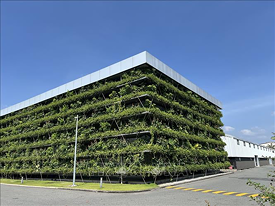
From the perspective of a green transformation business, Mr. Pham Van Duc - Sales Director of Greenovation Packaging Company (Green Pallet), a company specializing in the production of engineered wood pallets and other packaging products made from environmentally friendly materials in Vietnam, said that the company's production process is designed to ensure sustainability, efficiency and quality. With a capacity of 3 million pallets/year, Green Pallet makes the most of recycled wood and wood waste, does not use formaldehyde, contributing to reducing carbon emissions, along with a fully automated production line, operated mainly by solar energy.
"Using pallets from recycled materials helps businesses save production costs and contributes to the "dual carbon" goal: reducing carbon emissions and increasing carbon absorption, serving the production recirculation model. Through that, it also helps increase livelihoods for farmers and forest growers, reduce poverty and serve the country's sustainable production goals" - Mr. Pham Van Duc shared.
Faced with environmental challenges and green transformation, especially in the context of global priorities towards ESG standards, implementing the "Extended Producer Responsibility" (EPR) policy is necessary to promote the circular economy and protect the environment. Implementing EPR is also a solution for Vietnamese enterprises to overcome environmental barriers and challenges and develop sustainably when participating in the global supply chain.
EPR - a modern environmental management tool, applied by many countries in the world to attach responsibility to manufacturers and importers in the collection, recycling and treatment of products and packaging after use. Mr. Nguyen Thanh Yen, Deputy Head of Legal Policy Department - Department of Environment, Ministry of Agriculture and Environment , emphasized that enterprises play a central role in implementing EPR and developing a circular economy - an inevitable trend to replace the linear exploitation model. EPR is not only a legal obligation but also an opportunity for enterprises to transform sustainably, enhance their brands and compete globally.
Source: Tin Tuc News
- USTR Makes Findings and Proposes Action in 60 Section 301 Investigations Relating to Failures to Take Action on Trade in Forced Labor Goods
- [VCCI] The US officially initiates a Section 301 Investigation into Vietnam on Intellectual property
- General Secretary and President To Lam's working visit to three ASEAN countries: Demonstrating the stature of proactive and constructive diplomacy.
- Viet Nam accelerates innovation drive as skilled workforce becomes key to science and technology growth
- The US is increasing controls on AI chip exports