


Most viewed articles


Analysts want Canada to review its own tariffs on Chinese electric vehicles.
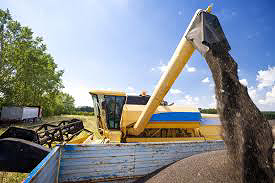
B.C. canola farmers are staring down millions in losses after China slapped new anti-dumping duties on Canadian canola just weeks before harvest begins.
The retaliatory 75.8 per cent tariff on canola seed is the latest volley in the ongoing trade fight between the two countries.
While farmers brace for the hit, experts are asking whether Canada's own 100 per cent tariffs on Chinese-made electric vehicles (EVs) are worth the cost, and if they should be scrapped in hopes China will reverse its canola tariff.
Ernest Wiebe, who farms 800 acres of canola in Montney near Fort St. John, B.C., says producers are feeling discouraged by a recent drop in price for their crops.
The price per bushel had been $15 to $16 earlier this year, but it's since dropped to about $12.50 to $13.20 a bushel, Wiebe said. And it's a long way off from the highs of $27 a bushel seen in 2022.
"With all the uncertainty and stress of tariffs, and anti-dumping duties, we have seen a significant slide in our prices," he said.
Doing the math
A price drop by about $3 per bushel can wipe out between $120 and $180 an acre, depending on yield, according to Wiebe, who sits on the board of the Canadian Canola Growers Association. For the roughly 290 producers in the Peace Region, who seed up to 110,000 acres a year and grow 95 per cent of B.C.'s canola, that's a massive hit.
Most of the crop is bound for China, where it's crushed and processed into cooking oil.
Meanwhile, input costs keep climbing. Fertilizer alone is up $200 a metric ton this year, Wiebe said, on top of higher bills for land, fuel, equipment, and taxes.
The growing price gap could mean tens of thousands, if not hundreds of thousands, in losses for the average farmer, and millions for B.C.'s economy.
"Overall, farmers [are] incredibly discouraged, and looking at it and going, 'Well, how are we going to make this all work?'" said Wiebe.
B.C. growers are hoping for an average or slightly above-average crop this year. But a very dry May followed by late June rains has delayed maturity, raising the risk that bad weather — possibly even snow — could interfere with harvest.
Pressure on Ottawa
Werner Antweiler, an associate professor at University of British Columbia's Sauder School of Business, says he is worried about farmers suffering the consequences of "arbitrary" Canadian tariffs.
The canola tariffs came after Canada's 100 per cent tariffs on Chinese EVs, and Antweiler says the EV tariffs weren't based on a proper investigation under World Trade Organization (WTO) principles.
Federal ministers meet with canola lobby to discuss new tariffs from China
As the U.S. trade war drags, calls grow for Canada to cautiously improve ties with China
"We should definitely revisit this issue and, in that way, also maybe reduce the countervailing duties that we now see on canola exports."
Stuart Smyth, a professor of agriculture and resource economics at the University of Saskatchewan, believes China's new tariffs are a strategic move to push down international canola prices before China buys large volumes at a discount. Similar tariffs in 2019 and 2020 cost the canola industry $2.3 billion, he said.
"If this stays in for six or eight months, we could be looking at billions of dollars in costs," Smyth told CBC Radio West host Sarah Penton.
China claims Canada is dumping canola below the cost of production, which the federal government denies. Smyth says Canada doesn't subsidize crops like other countries do, nor does it promote exports with subsidies.
Source: CBC
- US tariff threats over forced labour 'unjustified', Commission says
- US Section 301 Forced Labor Investigation: New Trade Compliance Risks for Viet Nam Exporters
- US cites forced labor concerns as grounds for new tariffs
- Aquatic products face challenge of maintaining market share in US
- Viet Nam extends anti-dumping duties on some Thai sugar products to 2031