


Most viewed articles


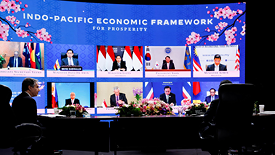
South Korea participates in several regional trade and investment arrangements, including the bilateral Korea-China Free Trade Agreement, the Asia Pacific Economic Cooperation (APEC) forum, and the Regional Comprehensive Economic Partnership (RCEP); it has also joined the Digital Economy Partnership Agreement (DEPA) and is considering following China’s example and applying for membership in the Comprehensive and Progressive Agreement for Trans-Pacific Partnership (CPTPP). All these initiatives are complementary and open to a broad range of countries and separate customs territories. The US-led Indo-Pacific Economic Framework (IPEF) would largely reinforce Korea’s benefits from other economic integration pacts, but in key respects it could build barricades instead of bridges to nonmember countries. The authors examine the progress in building IPEF, how the four IPEF pillars would advance and/or constrain Korean policy, and what the impact could be on Korea’s economic relations with major trading nations in the region, including China, which shares membership with Korea in important pacts like RCEP. The key challenge for Korea in IPEF will be to balance its relationships with China while deepening its economic and security ties with the United States.
More information is attached here
Source: Pile
- China retaliates against US blacklist, targets defence and rare earth firms with export controls
- Rising global shipping costs put pressure on Viet Nam’s seafood exporters
- Customs force tightens crackdown on intellectual property-infringing goods
- Continued resilience of Viet Nam's economy
- Viet Nam’s trade deficit raises structural concerns: opinion