

How India can lead multilateralism at WTO
19/06/2023 119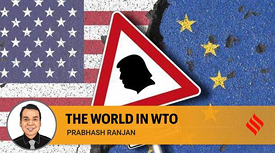
Most viewed articles


Prabhash Ranjan writes: Trade multilateralism might be out of fashion for the US, but remains of vital salience for countries like India. Hence, India, under its G20 presidency, should work with others to drive the WTO reforms agenda aimed at making trade multilateralism inclusive.
The recently concluded meeting of the G20 working group on trade and investment focused on the important issue of WTO reform. This has been on the global agenda for a while including that of the G20, whose members are key players in the WTO. However, any talk of WTO reform should not lose sight of the larger global context.
More than 50 years ago, Harvard professor Richard Cooper argued that “trade policy is foreign policy”. The world then valued economic interdependence with the belief that such interdependence would deter security confrontation. The WTO, created in that era, was aimed at legalising and policing economic interdependence. However, today’s world is dominated by geoeconomic considerations and heightened securitisation of international economic relations. The pursuit of unilateralism in international economic relations, especially by developed countries like the US, is on the rise with scant regard for WTO law.
Economic policies such as industrial subsidies and local content requirements have made a roaring comeback; forgotten WTO rules like security exceptions now occupy centre stage; and there is a deliberate effort to weaken trade multilateralism in favour of external plurilateral alignments keeping the big power confrontation in mind. As Jeffrey Schott of the Peterson Institute argues, in this milieu, it is naïve to believe that the developed G20 countries are interested in reforming the WTO for the better. A weak WTO perfectly suits the US as part of its foreign policy aimed at strategic rivalry with China.
Source: The India Express
- China retaliates against US blacklist, targets defence and rare earth firms with export controls
- Rising global shipping costs put pressure on Viet Nam’s seafood exporters
- Customs force tightens crackdown on intellectual property-infringing goods
- Continued resilience of Viet Nam's economy
- Viet Nam’s trade deficit raises structural concerns: opinion