


U.S. Trade Deficit Hit Record in 2022
08/02/2023 88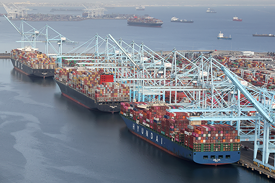
Most viewed articles


The U.S. posted its largest trade deficit on record last year, as global demand weakened amid high inflation, climbing interest rates, disruptions due to the Ukraine war and the pandemic’s continued effects.
America’s imports exceeded its exports by $948.1 billion in 2022, up 12.2% from 2021, the Commerce Department said Tuesday.
U.S. imports of goods and services fell in the final two quarters of the year, the department said, and exports fell in the fourth quarter, as commerce slowed around the world.
Economists said lower U.S. imports late last year reflected cooling consumer spending.
Other recent reports have painted a mixed U.S. economic picture as the Federal Reserve raises interest rates to battle inflation by slowing growth. Manufacturing output and home sales fell in December. But hiring surged in January and the nation’s gross domestic product grew at a solid 2.9% annual rate last quarter.
In China, an export boom that propelled the world’s second-largest economy through much of the pandemic has sputtered.
China’s exports to the rest of the world fell 9.9% in December compared with a year earlier, a steeper decline than the 8.7% drop recorded in November, according to Chinese customs data, reversing a long spell of surging exports earlier in the pandemic as Western consumers snapped up electronics and other consumer goods while working from home.
Trade also fell in Europe at the end of 2022, reflecting weakening domestic and overseas demand. German imports of goods dropped 6.1% in December from the prior month, while exports fell by 6.3%. In France, imports were 1.9% lower in the fourth quarter compared with the third, while exports were down 0.3%.
The recent trade trends reflect the pandemic’s latest effects, Gregory Daco, chief economist at Ernst & Young LLP, said. “Both supply and demand are rebalancing after a massive shock,” he said.
Mr. Daco said U.S. imports are likely to come “under increased pressure in an environment where consumer spending and business investment growth are moderating,” he added.
Imports of goods and services rose 1.3% in December from the prior month as Americans bought more foreign-made products such as cellphones and vehicles. Weaker demand for U.S. goods such as industrial supplies and consumer products contributed to a 0.9% decline in exports from the prior month.
U.S. imports of goods have broadly fallen since a March 2022 peak.
The December trade deficit was $67.4 billion, the Commerce Department said, up from a revised $61 billion in November.
Import cargo volume at the nation’s major container ports is expected to drop in February to its lowest level since May 2020, early in the pandemic, as retailers wait to see how the economy responds to efforts to bring inflation under control, The National Retail Federation, a trade group, said Tuesday.
Demand Decline
U.S. imports have fallen for two consecutive quarters as demand for goods softened.
The economic outlook has improved recently in other parts of the world. China eased Covid-19 restrictions and largely reopened its economy. Europe showed signs of stabilizing due to easing energy shortage threats related to the Ukraine war. The global economy is expected to grow more this year than previously expected, the International Monetary Fund said last week.
Chinese exports for 2022 were 7% higher than a year earlier, at $3.6 trillion, though that marked a slowdown from a double-digit percentage gain in 2021. That has reinforced concerns that China will no longer be able to count on robust trade to power its growth in 2023.
Fading Western demand and China’s zero-tolerance approach to Covid-19 outbreaks through last year took their toll on overseas sales by other Asian export powerhouses last year, too. South Korea’s exports in December were 9.6% lower than a year earlier, while exports from Taiwan were down 3%, according to data provider CEIC.
Japan’s exports in December grew 11.5%, aided by a steep fall in the yen against the dollar and other major currencies. Still, that was slower than the near-20% annual growth recorded in November, and sharply below annual growth of close to 30% recorded in September.
Global supply-chain snarls related to the pandemic created supply and demand imbalances last year, helping push U.S. inflation to a four-decade high. Business inventories fluctuated as companies slowed orders after building stockpiles aggressively in 2021, weighing on economic growth for part of last year.
Exports of U.S. petroleum products and liquefied natural gas boomed after Russia’s invasion of Ukraine led to sanctions on its energy products. Americans flocked to Europe as international travel reopened, taking advantage of a strong dollar.
U.S. import growth slowed last year compared with 2021 as consumers spent less overall on goods such as home-fitness equipment and furniture and boosted spending on services such as travel and restaurant meals.
Global shipping demand has slowed since November after retailers amassed excess inventory, said Anthony Fullbrook, the U.S. head of Taiwanese cargo and freight company OEC Group.
“We’re still dealing with oversupply, over-inventory from Covid,” he said. Mr. Fullbrook said the sharp slowdown in the U.S. housing market has reduced demand for shipments of furniture, kitchenware and lighting. “Globally, everyone is suffering from excess supply,” he said.
Source: The Wall Street Journal
- National traceability system for agro-forestry-fishery products to be launched on July 1
- European Parliament backs long-awaited digital euro to reduce US dominance in payments
- A decade after Brexit, Britain weighs costs and gains as it searches for a new leader
- Combating e-invoice fraud with big data technology
- Resolution 10-NQ/TW redefines foreign capital attraction