

Australia Rides Out Chinese Sanctions As Exports Boom
28/10/2022 76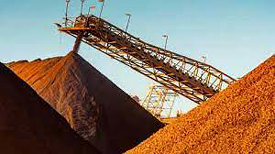
Most viewed articles


China’s introduction of trade sanctions on some Australian products in 2020 has brought unexpected benefits, with the latest economic statistics showing exports booming for the resource-rich country as it has had to shift its focus to other markets.
Australia’s trade figures have also improved due to China’s reliance on critical products, especially iron ore, wool and natural gas. They were spared the penalty of new tariffs, while increased demand boosted their sales.
The country’s long track record of economic growth looked fragile when China introduced punitive tariffs and controls on a range of Australian imports two years ago as political tensions between the two countries mounted.
The measures, introduced after the then Prime Minister of Australia, Scott Morrison, called for an investigation into the origins of Covid-19, threatened to weaken economic resilience.
Even after sanctions were imposed, China was the destination for more than 42 percent of its exports in 2021, compared to just 14 percent in 2007, as demand for iron ore and other minerals and fossil fuels, as well as consumer goods grew, according to the Australian think tank. Strategic Policy Institute.
“Australia hadn’t been so dependent on a single market since 1938, when it was the ‘motherland’ of the UK,” said David Uren, senior fellow at ASPI. For the first time in its history, it faced a situation where its largest trading partner had become an adversary, he said.
At the same time, barley growers who supply the brewers that make Tsingtao beer, beef farmers and the lobster industry were among the victims of the sanctions. Luxury wine producers, who charged high prices to Chinese consumers, and miners, whose product had been stranded on ships off the Chinese coast for months, were also affected.
Recommended
Two years later, the shift that has taken place is clear. According to data from the Australian Bureau of Statistics, China’s share of Australian exports had fallen to 29.5 percent in August — the first time since October 2015 in the three months to September, compared to 30 percent in 2021.
The decline in the value of exports is partly due to falling iron ore prices – Australia’s largest export, with Chinese demand for steel production fueling the country’s largest companies, including BHP, Rio Tinto and Fortescue. But trade with other Asian countries is also more lively. Excluding Japan, a traditional trading partner of Australia, South Korea, India and other ASEAN countries, now accounts for more than a third of the country’s exports.
Australia’s second quarter trade surplus reached A$43 billion (US$28 billion), driven by strong export activity and the soaring price of coal.
“The sanctions have not worked. The Australian economy, somewhat ironically, has remained strong on Chinese demand,” said Michael Wesley, vice-rector for international at the University of Melbourne.
“The Chinese economy cannot get rid of iron ore. It’s an unpleasant situation for them,” he said. According to the Lowy Institute, Australia exported $175 billion worth of iron ore to China in 2021.
Meanwhile, some Australian companies have managed to maintain their exposure to the lucrative Chinese market. Treasury Wine Estates, one of the world’s largest wine producers, was hit hard by the imposition of a 175 percent tariff on Australian wine, wiping out sales of the luxury brand Penfolds in its most profitable market.
Over the next two years, TWE’s sales of Penfolds grew in Singapore, Hong Kong and Taiwan. Still, it hasn’t given up on mainland China. It has started exporting French-made Penfolds to China and has now launched a Chinese version of Penfolds, using grapes from Ningxia and Shangri-La provinces.
“Since the day tariffs were put on us, we’ve said we weren’t walking away,” said TWE CEO Tim Ford, arguing that the trade and political aspects of the Australia-China relationship are “quite separate” goods.
In another example, Bubs, an infant formula manufacturer in a Melbourne suburb of Dandenong, has benefited from a massive expansion into China since 2008, where its products have been selling well.
Chairman Dennis Lim said his product is a “staple” so banning it or applying sanctions would have had repercussions in China. “They may ban lobster, but you can’t ban infant formula,” he said.
Don Farrell, Australia’s trade minister, said this month that his government had extended an “olive branch” to China to discuss “trade blockades”, but added that the dispute had shown the country “put all our eggs in China.” basket”.
Australia still remains vulnerable to further action from China if geopolitical relations continue to deteriorate. A report from the Lowy Institute pointed out that the country’s coal industry relies on Chinese banks for financing.
Richard McGregor, senior fellow for East Asia at the Lowy Institute, said Australia’s economic resilience has been encouraging, but the longer-term outlook may be less promising.
“Given the ongoing geopolitical rivalry between the US and China, and Australia’s position as a strong US ally, Canberra should assume that Beijing will continue to implement punitive trade measures in one form or another,” he said.
Source: New York Daily Paper
- National traceability system for agro-forestry-fishery products to be launched on July 1
- European Parliament backs long-awaited digital euro to reduce US dominance in payments
- A decade after Brexit, Britain weighs costs and gains as it searches for a new leader
- Combating e-invoice fraud with big data technology
- Resolution 10-NQ/TW redefines foreign capital attraction