


Most viewed articles


Mexico, Chile and Peru, three of the 11 member countries of the Comprehensive and Progressive Agreement for Trans-Pacific Partnership (CPTPP) are applying significant tax reductions to Vietnamese goods in accordance with the agreement.
CPTPP-based opportunities
The CPTPP took effect for Vietnam in January 2019. Among the three Latin American member states, Mexico has ratified the agreement, while Peru and Chile have yet to do so. Vietnam’s trade with Mexico, Chile, and Peru reached US$5.12 billion in 2019, including US$4.11 billion worth of Vietnamese exports, up 26.76 percent from 2018.
Vo Hong Anh, Deputy Director of the Ministry of Industry and Trade’s European-American Market Department, said Mexico, Chile and Peru are Vietnam’s biggest Latin American trade partners in terms of the country’s trade surplus that totaled more than US$3 billion in 2019.
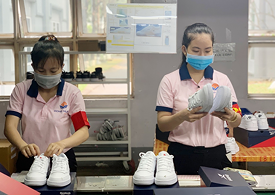
Despite the Covid-19 pandemic, exports to the three markets reached US$3.74 billion in the first 10 months of 2020, up 4.6 percent from the same period in 2019. Trade with Mexico and Chile grew 8.6 and 0.7 percent, respectively. Vietnam’s potential exports to those markets include textiles and garments, footwear, seafood, wooden products, phone and accessories of all kinds.
Market access opportunities
Mexico, Peru, and Chile have high tax reduction commitments to trade with Vietnam in accordance with the CPTPP agreement. Specifically, Mexico, Peru, and Chile pledged to reduce 80, 77 and 95 percent, respectively, of all tax lines on Vietnamese goods.
Luu Van Khang, Vietnamese Trade Counselor in Mexico, said Mexico has become a potential market for
Vietnamese seafood. Vietnamese frozen fish and shrimp exports to Mexico will be subject to a zero (0) percent tax from the third year of CPTPP implementation, he said. Mexico imports about US$351 million worth of frozen fish annually, and it is an easy-to-please market with a large population and high purchasing power, Khang said, advising Vietnamese businesses to pay attention to the price factor.
Peru is also a relatively easy market to penetrate, with about 75 percent of Peruvian import and export companies being small and medium-sized. Le Hong Quang, Vietnamese Trade Counselor in Brazil, said Peru is another market that Vietnamese traders should focus on, especially for textile and footwear products.
Although it is a small market in South America, Chile signed with Vietnam a free trade agreement in 2011, from which both countries can benefit.
Source: Vietnam Economic News
- Intensifying enforcement of the Viet Nam - Israel Free Trade Agreement
- High-tech manufacturing creates key driver of Viet Nam's growth
- EU car industry clashes over strategy to fight Chinese competitors
- Asia-Pacific renewable investment outpaces procurement efficiency
- New carbon market boosts pioneering steel firms