

China is inching toward another trade war
29/09/2020 61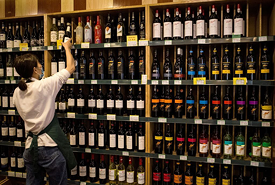
Most viewed articles


Over the course of this summer time—or winter, to Canberra—Beijing has imposed 80% tariffs on Australian barley, launched anti-dumping investigations into Australian wine, blocked Australian beef, arrested an Australian journalist, and reportedly banned two Australian teachers from visiting China.
However the seemingly sudden decline has, actually, been years within the making. Australia, regardless of its heavy dependence on China as an export market, stays a vocal critic of China’s rising international affect. Canberra, citing nationwide safety considerations, additionally has denied entry to Chinese language teachers, and has blocked Chinese language bids for main infrastructure tasks in Australia.
Two years in the past, the same mismatch of enterprise wants and safety fears pushed China and the U.S. right into a devastating commerce conflict. With that battle nonetheless unresolved, China’s spiraling relationship with Australia threatens to pull Beijing into one other commerce feud. On the road is $235 billion in annual commerce between the 2 powers.
Watermark
The excessive level in Sino-Aussie relations handed not too way back.
In 2015, the 2 sides inked the landmark China Australia Free Commerce Settlement (ChAFTA), bringing to a detailed ten years of negotiations. Underneath the deal, import duties on 95% of Australia’s exports to China had been waived whereas Chinese language funding in Australia’s personal sector was topic to much less scrutiny than earlier than.
“ChAFTA was the excessive watermark of Australia-China relations, going again to 1972 when diplomatic relations started,” says Michael Shoebridge, director of the protection, technique and nationwide safety program on the Australian Strategic Coverage institute. Commerce between Australia and China, which in 2019 was valued at $235 billion, is now greater than double the $108 billion it was in 2016.
However the bonhomie was short-lived. In 2017, native media reported that Beijing was shopping for affect in Australia’s authorities by tapping Chinese language-Australian enterprise leaders to fund native politicians. After the revelation, one senator resigned and the federal government handed a legislation targeting foreign interference.
The overseas interference legislation was very important and lengthy overdue, says Linda Jakobson, director of Australian suppose tank China Issues, however the best way the laws was launched—to focus on China particularly—broken relations.
“It wasn’t overseas interference, it was China interference. It was very focused at one nation,” Jakobson says. When the laws handed, then-Prime Minister Malcom Turnball chose to paraphrase Chairman Mao Zedong’s declaration on the founding of the Folks’s Republic of China in 1949 and mentioned, in Chinese language, that the Australian individuals had “stood up.”
“That merely delivered to a head Beijing’s displeasure with how Australia was dealing with the scenario,” Jakobson says. Diplomatic relations between the 2 international locations have been “mainly frozen” since then, she says.
Watershed
Canberra’s push towards perceived interference from China quickly focused expertise. In 2018, Canberra blocked Huawei and China’s state-owned ZTE from collaborating in its nationwide telecoms community, alleging that the 2 telecoms producers, each based mostly in Shenzhen, posed a nationwide safety risk.
“Australia made its choices properly prematurely of the U.S. and led that debate,” Shoebridge says. Washington—Huawei’s most vocal opponent—first aired its suspicions in regards to the Chinese language tech large in 2013, however Australia banned Huawei from its 5G rollout a month earlier than the U.S. did. This 12 months Canberra has continued to match Washington’s rhetoric towards China.
In April, Australia advocated for an unbiased worldwide investigation into the origins of COVID-19. Prime Minister Scott Morrison talked about imbuing the World Well being Group with powers much like these of UN “weapon inspectors,” a suggestion that implied that Beijing had performed an lively position within the viral unfold.
Canberra’s coverage strategy was too abrasive to collect allies, nonetheless, so the federal government pivoted as an alternative to support a softer decision introduced by the EU to the World Well being Authority, which governs the WHO. The decision known as for an unbiased, worldwide “evaluation” of the virus’ origin and didn’t goal China particularly. When the decision handed, Australia claimed victory; the Chinese language embassy mentioned the measure was laughable
“The draft decision on COVID-19 to be adopted by the World Well being Meeting is completely completely different from Australia’s proposal of an unbiased worldwide evaluation,” a spokesman for the Chinese language embassy in Australia informed Reuters. “To say the WHA’s decision a vindication of Australia’s name is nothing however a joke.”
Beefing
China’s ambassador to Australia had earlier warned that if Canberra pursued an investigation into COVID-19, Chinese language shoppers would possibly start boycotting Australian imports. However, ultimately, it was the Chinese language authorities itself that focused Australian items.
On the day the WHA decision handed, China imposed an 80% anti-dumping tariff on imports of Australian barley. Australia ships 70% of its barley to China. China banned beef imports from 4 Australian processing crops days earlier. Then in August, Beijing launched an anti-dumping probe into imports of Australian wine. China is the most important abroad marketplace for Australian wine makers, importing $850 million price of wine a 12 months.
Within the wake of Beijing’s tariffs and bans, Australian exporters have rushed to search out different markets whereas Canberra stokes tensions. Australia blocked the sale of a Japanese-owned drinks subsidiary to a Chinese language firm, claiming the $430 million deal was “opposite to the nationwide curiosity” in August.
“The Treasurer hasn’t made clear how [the deal] was opposite to the nationwide curiosity,” says James Laurenceson, director of the Australia-China Relations Institute on the College of Expertise Sydney. Canberra maintains that it hasn’t taken punitive commerce motion towards China. However now, Laurenceson says, “You do have to fret that we’re drifting in the direction of a tit-for-tat commerce conflict.”
Tit for tat
China’s commerce conflict with the U.S. is projected to price the American financial system an estimated $316 billion by means of to the tip of this 12 months, with Beijing primarily concentrating on agricultural imports. The fallout of a commerce conflict may very well be “catastrophic” for particular person Australian firms. However, Laurenceson argues, it may very well be worse for Beijing.
China is the world’s largest shopper of iron ore, which it processes into metal to help its huge infrastructure tasks. Roughly 60% of China’s iron ore supply is from Australia. Within the first half of the 12 months, Australia additionally grew to become China’s No. 1 supply for coking coal—used to warmth smelting furnaces. Demand for the high-burning gas surged 67%, regardless of the continued downturn in relations.
“That’s why Australia has extra leverage within the relationship than loads of narrative suggests,” says Shoebridge. China’s financial motion towards Australia has thus far solely focused “discretionary” items imports. The $57 billion enterprise of iron ore, gasoline and coal exports—the majority worth of Australia’s exports to China—have remained untouched.
In keeping with Shoebridge, Australia’s future strategy to commerce with China will search to conflate financial and political targets right into a single coverage, slightly than treating them as separate tracks. Such an strategy, Shoebridge says, can be consistent with “the best way China operates.”
One instance of that’s Beijing’s requirement that overseas firms switch expertise to Chinese language companions so as to function within the home market. It was this “forced tech transfer” coverage that actually initiated the U.S.-China commerce conflict, as Washington feared U.S. firms had given away their edge in tech.
The White Home is now imitating the Chinese language coverage it initially fought towards. That’s clear from President Donald Trump’s insistence that TikTok—a well-liked app owned by Beijing-based Bytedance—be offered to or presumably accomplice with an American agency to keep up its U.S. operations. It’s not unreasonable to suppose Australia will pivot in the identical means.
Source: Unfold Times
- Intensifying enforcement of the Viet Nam - Israel Free Trade Agreement
- High-tech manufacturing creates key driver of Viet Nam's growth
- EU car industry clashes over strategy to fight Chinese competitors
- Asia-Pacific renewable investment outpaces procurement efficiency
- New carbon market boosts pioneering steel firms