


US boosts new trade deal with Mexico, Canada
29/03/2019 73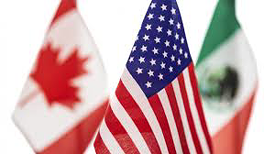
Most viewed articles


US President Donald Trump is stepping up efforts alongside business groups to get approval from Congress for the US-Mexico-Canada trade agreement.
However, prospects are uncertain because Republicans dislike some aspects of the plan and Democrats are not in a haste to secure a political victory for the president.
Trump is expected to meet with GOP lawmakers to begin the process for rounding up votes on Capitol Hill.
Supporters in Congress and business groups say they have a narrow window to push it through because lawmakers tend to avoid tough trade votes during election season.
According to Rep. Earl Blumenauer, D-Ore., the chairman of the House subcommittee that has jurisdiction over trade, the pact needed adjustments to be “worthy of support”.
Some Republican lawmakers have also raised concerns.
The Republican chairman of the Senate Finance Committee, Sen. Chuck Grassley of Iowa, advised Trump to lift steel and aluminum tariffs on products imported from Canada and Mexico as a first step to getting the trade agreement through Congress.
For two months now, the legislative affairs team in the White House has talked to about 290 members of Congress and staff in order to push the deal.
Trump’s administration is aware that making changes in the agreement for congressional approval could mar the chances of getting support for the pact from Canada and Mexico.
She added that many in her state’s agricultural community were “still with the president, but if we don’t get the trade deals done, they could turn quickly.”
The trade deal would replace the North American Free Trade Agreement, NAFTA which took effect in 1994 and gradually eliminated tariffs on goods produced and traded within North America.
Trade between the US and NAFTA partners has more than tripled since the agreement took effect, and more rapidly than trade with the rest of the world.
Trump had called NAFTA a disaster for the US and said the new pact his administration negotiated would increase manufacturing in the country.
Trump fears that if lawmakers don’t approve the pact, the U.S. might revert to “pre-NAFTA” era.
Blumenauer said, “I don’t think anyone wants to blow it up, but there is interest in strengthening it,” as he hopes to make changes to the agreement in four areas, including enhancing environmental and labour protections, ensuring enforcement of the agreement, and taking on protections for pharmaceutical companies that he believes raise drug costs for consumers.
A ranking Republican on the trade subcommittee, Rep. Vern Buchanan of Florida, said he believes the vast majority of Republicans would vote for the agreement.
He had told his Democratic colleagues that Republicans were “open-minded to try and get some things done” to address their concerns.
A vice president at the National Foreign Trade Council, Vanessa Sciarra, stated that it was too soon to tell how the vote would pan out and said lawmakers hate to see Trump make good his threat to withdraw from NAFTA if he couldn’t get Congress to ratify the pact. Canada has been lobbying the US to put an end to Trump’s steel and aluminum tariffs, suggesting that approval by Canada’s Parliament could be conditioned upon them being lifted.
Canadian ambassador to Washington, David MacNaughton, has said it would be a tough sell to pass if the tariffs were still in place.
A trade lawyer and Canada-US specialist in Columbus, Ohio, Dan Ujczo, said the trade deal could pass “relatively quickly” once the tariffs were removed.
In Mexico, representatives of current President Andres Manuel Lopez Obrador were deeply involved in the talks to ensure an agreement that both the outgoing and incoming administrations could live with.
The administration of former President Enrique Pena Nieto had led Mexico’s negotiations.
Allies of Lopez Obrador, who took office Dec. 1, enjoy a large majority in the Mexican Senate. So, passage of the agreement would seemingly go smoothly.
Former chief negotiator for Pena Nieto’s government and an international trade consultant at Mexico
City-based AGON, Kenneth Smith Ramos, said Mexican enthusiasm for the deal could dim though if there were significant new demands on labour, pharmaceuticals, the environment or other issues.
He added that if “the U.S. still wants more, then that starts to unbalance the agreement and there may be a growing opposition in Mexico”.
Source: TUNF