


Merkel, Macri emphasise multilateralism and free trade
09/06/2017 88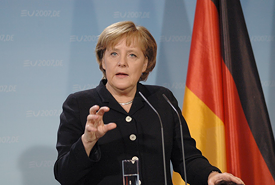
Most viewed articles


Germany’s Chancellor Angela Merkel made it abundantly clear yesterday that her country is on the lookout for new partners, that Argentina could play that role and that institutions such as the G20 are of primary importance in the face of rising protectionism and unilateralism.
On her first visit to Argentina as German chancellor, Merkel said at a Casa Rosada press conference that “nobody in this world, no country nor a single country nor a single person on their own is able to solve problems by themselves,” when asked about her seeming role as leader of Europe and a foil to US President Donald Trump.
Germany will host the G20 next month and Argentina will do the same in 2018. Yesterday’s meetings between Merkel and President Mauricio Macri concerned coordinating the summit as part of the G20’s troika.
Setting the agenda and ensuring greater consensus has come to the fore in light of the differences that surfaced at the recent G7 summit with US Donald Trump and his subsequent decision to announce the withdrawal of the United States from the Paris Agreement on climate change.
Merkel and Macri have met several times since Macri was elected but yesterday’s visit took on special meaning in light of recent global developments.
“We all have to cooperate and we call for a free and open world that seeks to give globalisation a human element so that there are benefits for everyone,” said Merkel, noting that Berlin is “looking for allies for the issues that matter to us” and that the inter-connected nature of global problems required joint efforts.
Macri enthusiastically welcomed Merkel and said that in areas such as “democracy, human rights, climate change, the fight against terrorism and organised crime we will always cooperate, looking for alternatives where we can complement each other.” The president also reiterated Argentina’s position in favour of honouring the Paris Agreement, and emphasised his support for increasing trade and investments flows, arguing that isolation had caused poverty in the past.
Merkel’s Latin American tour continues with onward travel to Mexico, the country most affected in the region by Trump’s election. While Macri stressed the strength of the relationship with Germany, Buenos Aires may now be forced into a balancing-act ahead of the G20 in light of the seemingly warm relationship with the Trump administration cultivated during Macri’s visit to Washington in April.
Hope for trade deal
The two leaders also voiced hopes yesterday for a free-trade agreement between the European Union and the Mercosur. In “We are glad that negotiations for a trade deal between Mercosur and the European Union have been relaunched after having been interrupted for a year,” she said in an address after meeting with German business leaders.
Although disagreements between Mercosur countries had delayed the talks, Macri insisted Argentina, Brazil and other members now agree on the need for a deal.
The prospect of a trade partnership between the two blocs raises potentially tricky questions over competition in the agricultural market.
“I am optimistic,” Macri told the press. “I think Chancellor Merkel is going to have more work to do with the protectionists in the EU agricultural sector than we will in Mercosur.”
Merkel acknowledged that although Germany can be a “difficult partner” at times and that there was some scepticism in the German agricultural sector “when there is a will to reach an accord, compromise solutions will have to be accepted.” She also noted that the Mercosur would have to cede in some of its demands in order to bring the frequently delayed free trade deal to a successful conclusion. Agriculture is just one of several areas where there are disagreements between the EU and the Mercosur.
As part of her one-day visit to Buenos Aires, Merkel visited a synagogue to inaugurate a newly restored German organ, met with small and medium-sized
business leaders, met with Macri, visited Remembrance Park in honour of the victims of the dictatorship, addressed students and scientists in a town hall-style setting and finally attended a dinner hosted by Macri at the CCK.
At Remembrance Park Merkel spoke with Vera Jarach, a member of the Mothers of Plaza de Mayo - Founding Line, who told the chancellor of how her grandfather had been a victim of the Holocaust and that her daughter had been kidnapped by the military dictatorship in Argentina. Jarach stressed how neither had graves that she could visit and that there was no place for denialism of the atrocities. Merkel listened as Jarach said that the current administration had officials, a reference to Darío Lopérfido, who had engaged in denial of the crimes of the dictatorship, particularly of the number of victims.
Source: Buenos Aires Herald