



Market size of Australia
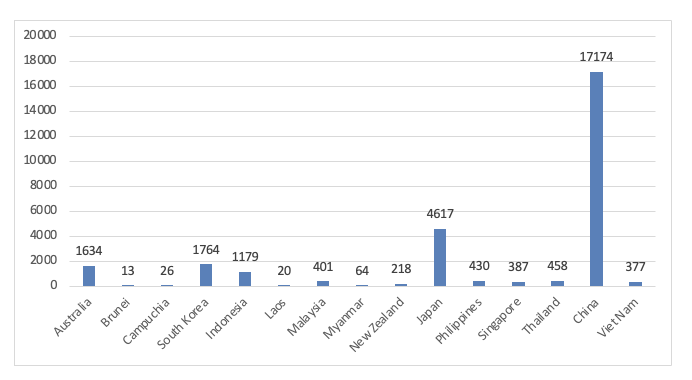
Australia is the 13th largest economy in the world and the 4th largest in RCEP (after China, Japan and South Korea) with a total GDP in 2023 reaching 1,634 billion USD (World Bank, 2024).
Figure 1: GDP comparison between Australia and RCEP countries in 2023
Source: World Bank, 2024
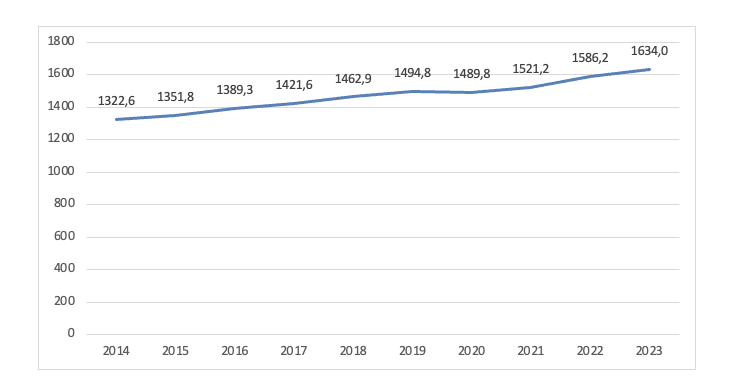
Over the past decade, Australia's economy has grown relatively well, with GDP increasing from $1,323 billion in 2014 to $1,634 billion in 2023, with an average growth rate of 2.4% per year in the 2014-2023 period.
Under the impact of the COVID-19 pandemic, Australia's GDP only decreased slightly by -0.3% in 2020, then quickly recovered and grew again (with GDP growth rates reaching 2.1% in 2021 and 4.3% in 2022, respectively). Despite the prolonged negative effects of the Russia-Ukraine war, Australia's economy is still growing well with an increase of 3% in 2023 (World Bank).
Figure 2: Australia’s GDP in the period 2014-2023
Source: World Bank, 2024
Australia's economy has been relatively stable in recent years with inflation rates maintained at a relatively low level, averaging 2.7% per year in the 2014-2023 period (World Bank, 2024).
Australia is a country with a relatively small population of only about 26.64 million people (World Bank 2023 data). However, Australia is among the highest-income countries in the world with GDP per capita in 2023 reaching about 61,341 USD/person. With this income level, Australian consumers have the ability to pay a lot for consumer goods
Source: Center for WTO and International Trade
