

Awareness of regulations and impacts of supply chain due diligence laws in European markets
A survey conducted by the Center for WTO and International Trade - VCCI in July - August 2025, with a total of 375 responses from stakeholders involved in EU supply chains, produced results that were unsurprising but somewhat concerning.
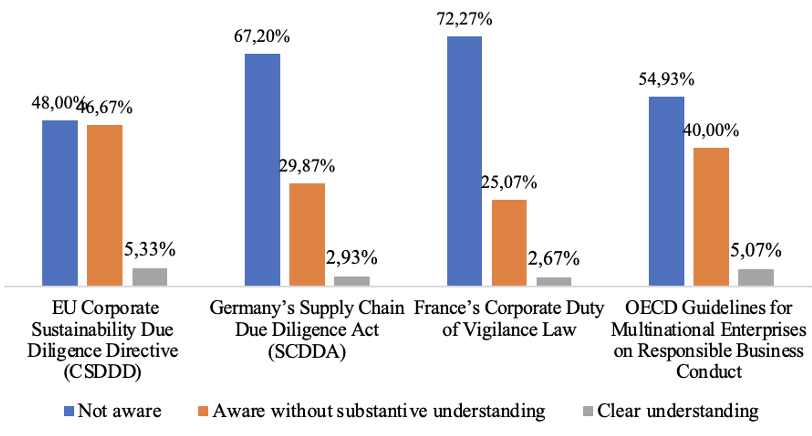
Regarding awareness, overall, 48% of respondents had never heard of the CSDDD, 46.7% had heard of it but had not studied it in depth, and only 5.3% had studied and had a relatively good understanding of its content.
Nonetheless, this rate is relatively positive compared with awareness of other SCDD-related legal systems among Vietnamese stakeholders. Specifically, 67.2% had never heard of Germany’s Supply Chain Due Diligence Act (SCDDA), 72.3% had never heard of France’s Duty of Vigilance Law, 54.9% had never heard of the OECD Guidelines for Responsible Business Conduct.
Figure: Vietnamese stakeholders’ knowledge of SCDD legal systems in the EU and globally
Source: Center for WTO and International Trade’s Quick Survey, August 2025
A positive signal is that respondents from state management agencies, associations, and consulting organizations showed the highest level of understanding of supply chain due diligence regulations. These are key groups in disseminating information and supporting businesses in this matter. Therefore, there is reason to hope that awareness among other stakeholder groups, especially entrepreneurs, managers, employees, and workers within enterprises, will improve in the near future.
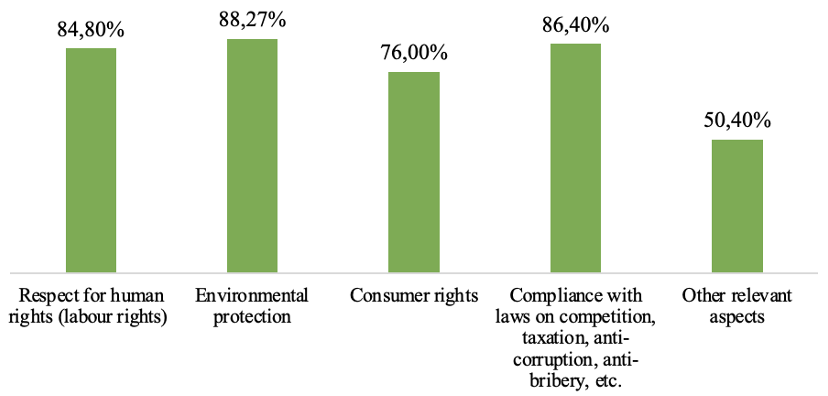
Regarding due diligence aspects, even though many respondents had limited or no prior knowledge of SCDD regulations, most correctly speculated the main categories of due diligence standards. Specifically, 84.8% of respondents recognized that supply chain due diligence laws include human rights standards (including labour rights), 88.3% identified environmental standards (the two main categories under CSDDD and SCDDA), 86.4% selected other standards such as competition law, taxation, and anti-corruption (as described in the OECD Guidelines).
However, it seems that most Vietnamese stakeholders have yet to recognize that the essence of supply chain due diligence is not about fulfilling or complying with labour, environmental, or other standards. Rather, it is about the responsibility to prevent and mitigate risks of violations or adverse impacts on these rights, as well as addressing and limiting harm if violations occur.
Figure: Identification of Supply Chain Due Diligence Aspects
Source: Center for WTO and International Trade’s Quick Survey, August 2025
Regarding expected impacts, overall, respondents believed that EU supply chain due diligence (SCDD) regulations are or will have a “significant impact” on Viet Nam’s exports to the EU at present, in the near future, and in the long term, with rates of 51.2%, 47.3%, and 61.1%, respectively.
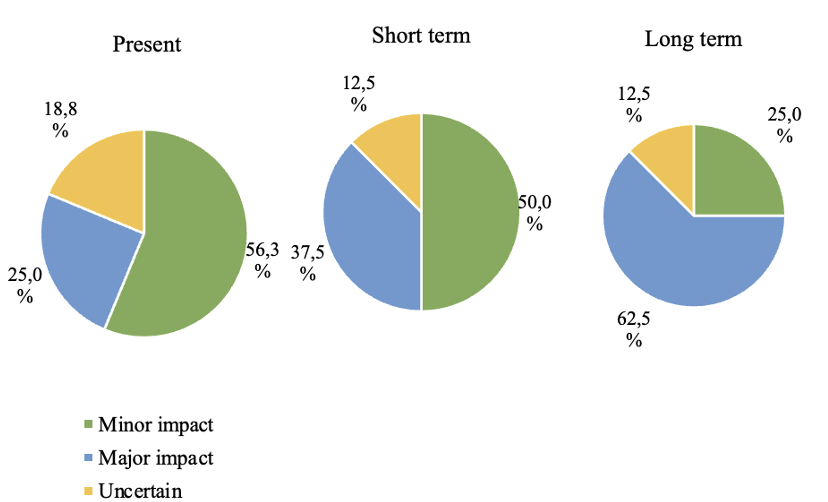
Specifically, respondents from associations and consulting organizations tended to take a more measured view. Most of this group assessed that SCDD regulations would only have a significant impact on Viet Nam’s exports to the EU in the long term, rather than immediately or in the near future. In detail, 56.3% of this group believed SCDD regulations would have only slight impact on exports at present, 50% expected a slight impact in the near future, 62.5% assessed that these regulations would have a significant impact in the long term. Although not overly concerned, this group remained very cautious, while some were uncertain about the effects of these regulations, no respondent indicated that SCDD regulations are or will be “without impact” on Viet Nam’s exports to the EU.
Figure: Assessment of the Impact of Supply Chain Due Diligence Regulations on Viet Nam’s Exports to the EU by Associations and Consulting Organizations
Source: Center for WTO and International Trade’s Quick Survey, August 2025
The assessments from respondents representing associations and consulting organizations closely reflect reality, particularly in the following aspects:
- Currently, only a few European countries have implemented supply chain due diligence regulations, while the EU Directive will only start applying to enterprises across all 27 member states from mid-2027 to 2028.
- Unlike technical regulations (TBT) or sanitary and phytosanitary standards (SPS), supply chain due diligence regulations do not apply directly to exported goods or Vietnamese suppliers. Therefore, legally, even if a part of the supply chain violates SCDD requirements, the related goods can still be imported into Europe without penalties, bans, or restrictions.
- In the longer term, Vietnamese suppliers who do not comply with or meet supply chain due diligence requirements may face risks such as having current orders halted or losing opportunities for future orders, as European partners may choose other suppliers with lower risk exposure.
Thus, from the perspective of awareness, it is evident that knowledge of supply chain due diligence in European markets among relevant stakeholders in Viet Nam, particularly the group of enterprises directly affected, is still very limited. Nevertheless, a positive point is that most respondents were able to make relatively accurate guesses regarding the main policy trends in European markets and demonstrated a certain level of vigilance regarding these issues. This provides a foundation for disseminating information, raising awareness, and promoting compliance with these regulations within the relevant supply chains in Viet Nam.
Source: Compiled by the TTWTO-VCCI Research Group
- Scope of Vietnamese suppliers potentially affected from the supply chain due diligence requirements of European markets
- Responsibility to comply with human rights and environmental standards of Vietnamese suppliers in the supply chain due diligence process
- Responsibility to implement certain measures of Vietnamese suppliers in the supply chain due diligence process
- Supply chain due diligence and textile and footwear supply chains in EU
- Actors in textile, garment and footwear supply chains potentially affected by due diligence requirements